

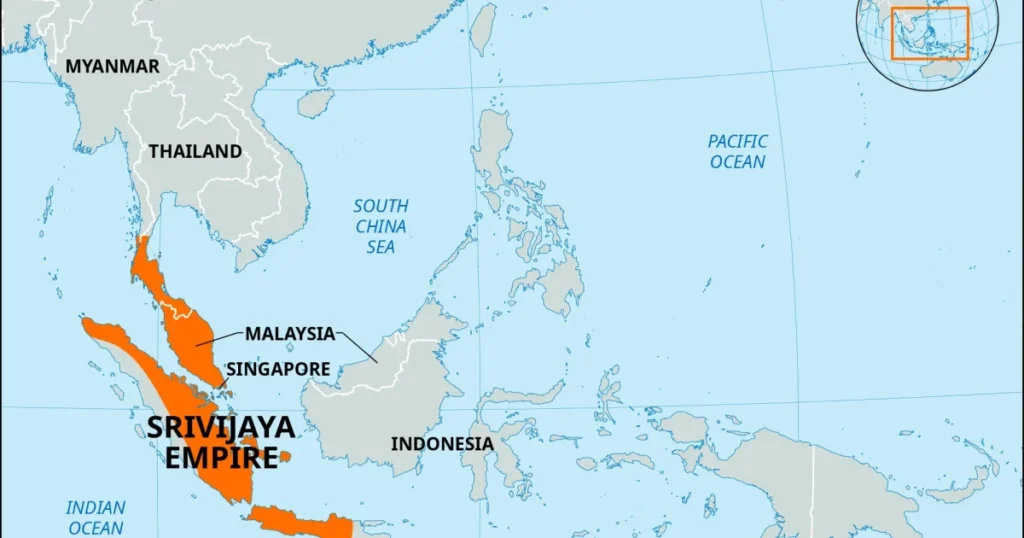
Almost nobody can name the kingdom of Srivijaya — yet over 600 years, this maritime kingdom controlled the most important trade routes in Asia. This kingdom built one of the greatest Buddhist civilization the world ever seen! It dominated the region of Southeast Asia longer than the British empire dominated India. However, the kingdom was forgotten after its fall that historians only confirmed its existence in 1918.
The most powerful maritime empire in Southeast Asian history being almost completely wiped out into the modern world — is the first thing you need to understand about Srivijaya. Their existence left no pyramids, stone temples, monumental ruins that tourist flock to photograph. It ruled not through territorial conquest but through trade. However, when that control slipped, it vanished from history as quietly as it had once dominated it. This is the full story of Srivijaya, one the world’s most underrated and forgotten empire. Their existence laid a foundation on the world which Majapahit, Malacca, and modern Southeast Asia were all constructed.
Key Facts: Srivijaya Empire History at a Glance
| Founded | c. 650 AD by Maharaja Dapunta Hyang Sri Jayanasa |
| Capital | Palembang, southern Sumatra |
| Peak territory | Sumatra, Malay Peninsula, western Java, parts of Borneo and the Philippines |
| Religion | Mahayana and Vajrayana Buddhism |
| Official language | Old Malay in Pallava script |
| Peak period | 7th–10th century |
| Fell | 13th–14th century |
| Rediscovered | 1918 by French scholar George Coedès |
| Legacy | Malay language, Buddhist culture, foundation for Malacca Sultanate |
The Rise of Srivijaya: How a Sumatran Port Became a Maritime Empire (7th Century)
Geography played a major role in shaping destiny and Srivijaya empire’s history. Nowhere in Southeast Asian history is that truth more vividly demonstrated than in the rise of Srivijaya. The empire was born not from military conquest or dynastic ambition but from the extraordinary strategic advantage of its location.
Palembang — the perfect base for a maritime empire
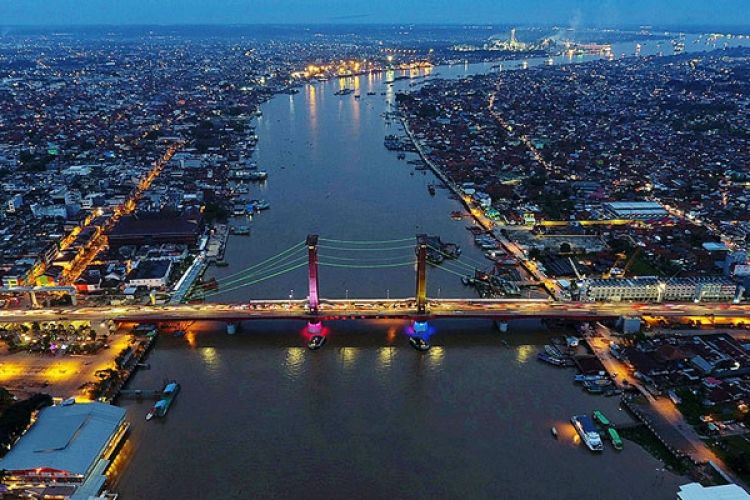
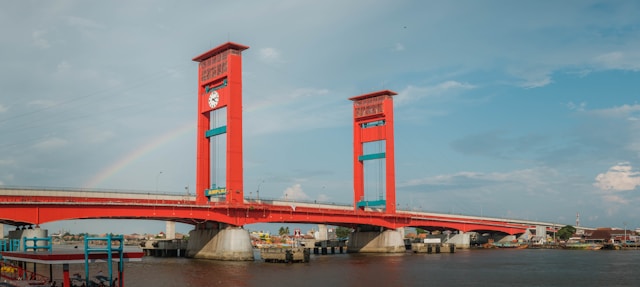
The oldest known surviving inscription known as the kedukan bukit inscription, provide evidence on how the foundation of the settlement become the capital of Srivijaya. The city of Palembang sits on the Musi river in southern Sumatra, located 80 kilometers from the coast. The city located deep enough onland to be protected from direct seaborne attack, yet accessible by river for ocean-going vessels to reach its port. The river mouth itself was wide and deep, capable of sheltering large fleets. The surrounding lowlands were fertile enough to feed a substantial population.
Srivijaya, known as a maritime empire, where Maharaja Dapunta Hyang Sri Jayanasa established the kingdom. The early Siddhayatra inscriptions mentioned his name, which detail a sacred journey to obtain blessings alongside his military expansion into neighboring areas. The empire’s founder understood from the beginning that Srivijaya’s power would rest not on the size of its army but on its control of the sea lanes that connected the civilizations of Asia.
The Strait of Malacca — controlling the throat of Asian trade
Between the southern tip of the Malay Peninsula and the northeastern coast of Sumatra lies one of the most strategic waterways on earth — the Strait of Malacca. In the ancient and medieval world, virtually all trade moving between the Indian Ocean civilizations (Arabia, Persia, India) and the Pacific civilizations (China, Japan, Korea) passed through this narrow channel. Spices from the Maluku Islands, silk from China, cotton and pepper from India, gold and camphor from Sumatra passed through this chokepoint.
Dominating the Malacca and Sunda straits, Srivijaya controlled both the spice route traffic and local trade, charging a toll on passing ships. Serving as an entry for Chinese, Malay, and Indian markets, the port of Palembang, accessible from the coast by way of a river, accumulated great wealth. Any ship that wanted to trade between East and West had two choices — pay Srivijaya’s tolls and trade under its protection, or risk the pirates and storms of an alternative route. Most chose to pay Srivijaya the toll fee and it made Srivijaya fabulously wealthy.
The Orang Laut — sea nomads as Srivijaya’s naval force
Similar to Malacca’s strategy, the Orang Laut (Sea People) became one of the key components of Srivijaya’s maritime power. These people consist of communities of maritime nomads who had lived on and around the waters of the Strait of Malacca for generations. The Orang Laut knew every channel, every current, every hidden anchorage in the waters around Sumatra and the Malay Peninsula. They were the most skilled navigators and sailors in the region.
Srivijaya incorporated the Orang Laut into its power structure by giving them a privileged role in the empire’s naval and commercial system. In return, the orang laut. It was an alliance that gave Srivijaya something no rival could easily replicate — a naval force that was essentially born from the sea itself.
Early expansion — Sumatra, the Malay Peninsula, western Java
From its capital of Palembang, Srivijaya expanded rapidly in the late 7th and early 8th centuries. The domination of the region through trade and conquest in the seventh and ninth centuries began with the absorption of the first rival power center, the Jambi kingdom. Srivijaya’s expansion followed the logic of its maritime strategy — it did not conquer territory for its own sake but secured the ports and chokepoints that controlled trade. The Malay Peninsula, western Java, parts of Borneo, and strategic points along the Sunda Strait all came under Srivijayan influence. Their conquest not necessarily as directly administered territories but as tributaries that recognized Srivijayan commercial supremacy and paid accordingly.
The Golden Age: Trade, Buddhism, and the Centre of Asian Commerce (7th–10th Century)
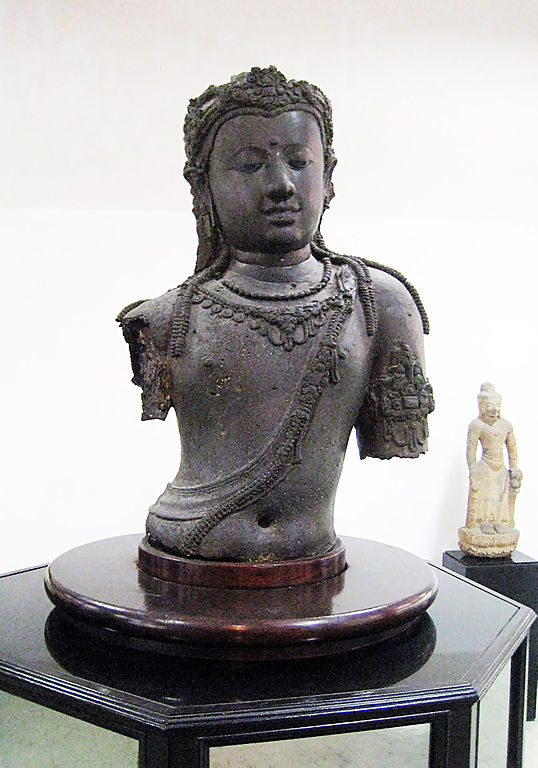
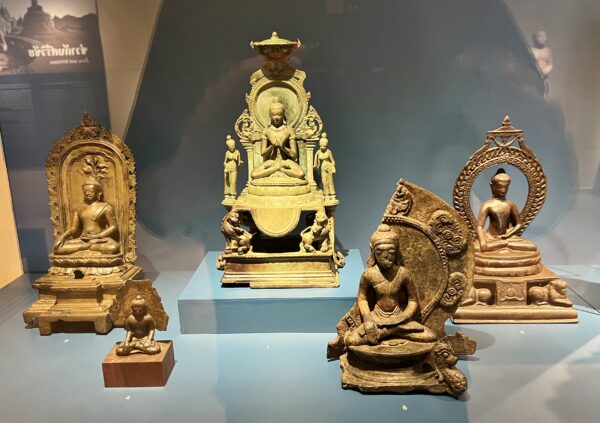
At the height of its power, Srivijaya became one of the wealthiest and most cosmopolitan civilizations in the world. Their city became a melting pot where Chinese pilgrims, Indian scholars, Arab merchants, and Malay traders mingled in one of Asia’s great crossroads cities.
The Chinese connection — Tang dynasty trade and diplomacy
China became Srivijaya’s most important trading partner and diplomatic ally. The Tang dynasty, which ruled China during Srivijaya’s time, maintained an active interest in the maritime trade route of Southeast Asia. Srivijayan rulers sent regular tribute missions to the Tang court, bringing exotic goods and performing the ceremonial acts of submission that the Chinese tributary system required.
In return, Chinese imperial recognition gave Srivijaya enormous prestige among the other kingdoms and ports of Southeast Asia. A state that had the blessing of the Chinese emperor was a state to be treated with respect and to trade with rather than challenge. The Chinese connection became commercially valuable and politically protective. This transform their relation into a diplomatic achievement that Srivijaya’s rulers maintained with great skill across multiple Chinese dynasties.
The greatest Buddhist centre in Southeast Asia
Srivijaya’s commercial wealth funded something remarkable — a center of Buddhist learning and scholarship. As the region’s buddhist center, the Srivijaya kingdom successfully drew pilgrims and students from across Asia. Srivijaya followed Mahayana and Vajrayana sects of Buddhism and became an important Buddhist learning centre. Buddhist monks travelled from China to Nalanda University in India regularly stayed at Palembang for religious studies and Sanskrit learning.
Srivijayan rulers established Buddhist monasteries at Nagapattinam in southeastern India. King Maravijayattungavarman built the Chudamani Vihara there during the reign of Raja Chola I. The empire’s religious patronage extended far beyond its own territory — a demonstration of wealth, piety, and cultural ambition that few kingdoms of the era could match.
I Tsing’s account — a Chinese monk’s eyewitness description
The most vivid and detailed portrait of Srivijaya at its height comes from a Chinese Buddhist monk named I Tsing. He visited Palembang in 671 AD and spent several years studying there before continuing his journey to India.
The Chinese pilgrim I Tsing, who visited the city in the 7th century, described it as a major scientific centre with a magnificent library where a thousand scholars studied. I Tsing visited Palembang in 671 CE and recorded that more than 1,000 Buddhist monks lived there. He recommended that Chinese monks traveling to India stop at Palembang to study Sanskrit and Buddhist philosophy before continuing their journey. His endorsement made Srivijaya as an essential waystation on the Buddhist intellectual pilgrimage route between East Asia and South Asia.
I Tsing’s account is one of the most precious historical documents about Srivijaya — because Srivijaya left so few written records of its own. The empire governed largely through oral tradition and practical commercial relationships rather than elaborate bureaucratic inscription, which is one of the reasons it proved so difficult for later historians to reconstruct.
Trade goods — spices, gold, tin, forest products
Srivijaya traded ivory, camphor, sandalwood, cloves, nutmeg, tin, gold, spices, silk, porcelain and medicinal products. The empire also issued gold and silver coins embossed with sandalwood flower symbols and Sanskrit words. The range of commodities flowing through Palembang reflected Srivijaya’s position as the great entrepôt between East and West.
The issuance of its own coinage — gold and silver, with distinctly Srivijayan iconography — speaks to the empire’s commercial sophistication and its desire to create a standardized medium of exchange that would facilitate trade across its vast commercial network. Srivijaya was not merely a passive tax collector on trade passing through its waters. It was an active commercial civilization that shaped, directed, and profited from the flow of goods across half the world.
The tributary system — how Srivijaya maintained its empire without armies
Perhaps the most remarkable aspect of Srivijaya’s political model reflects on how it maintained control over such a vast network of ports with a relatively small military force. Tributary system became the key of relationships in which smaller kingdoms and ports acknowledged Srivijayan supremacy, paid regular tribute, and received in return the right to trade freely within Srivijaya’s commercial network. In addition, these kingdoms also received the protection of Srivijayan naval power against pirates and rivals.
Srivijaya became empire as franchise rather than empire as occupation. Srivijaya did not station garrisons in every port it controlled — it offered something more valuable: access to the most important trade network in Asia, backed by the most powerful navy in the region. Kingdoms that joined the network prospered. Those that refused faced commercial exclusion and, when necessary, naval punishment. The system was elegant, efficient, and highly effective in maintaining Srivijaya’s dominance in the region.
How Srivijaya Ruled the Seas: Power Without Territory
Srivijaya represents one of history’s most fascinating experiments in political organization — an empire built not on territorial control but on the mastery of movement. Understanding this model is the key to understanding both Srivijaya’s extraordinary success and the nature of its eventual vulnerability.
Maritime power vs territorial control — a different kind of empire
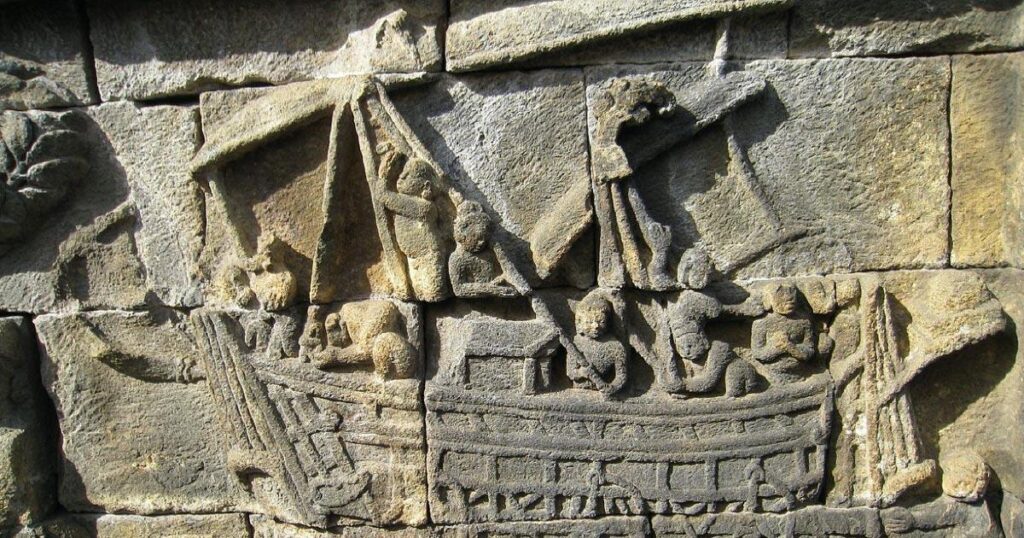
Most of the empires that dominate the world, usually expand their land by conquering others. Afterwards, they will established administrative systems, built roads and stationed armies. However, Srivijaya did none of these things. What it controlled instead were the sea lanes — the invisible highways along which everything of value in the medieval Asian world moved.
The Srivijaya used the thalassocratic model, where they ruled the sea rather than by land. It gave Srivijaya capabilities that other empires struggled to replicate. They could easily enforce commercial compliance through naval blockade rather than military occupation. It could expand its influence by incorporating new ports into its commercial network rather than conquering them by force. And it could maintain its dominance without the enormous expense of administering a territorial bureaucracy.
Tribute relationships — loyalty bought with trade privileges
Kingdoms that accepted Srivijayan suzerainty gained access to the most lucrative trade network in Asia. From this network, they possess direct access to Chinese goods, Indian textiles, the spices of the Maluku Islands, all flowing through a Srivijayan-protected commercial system. On the other hand, kingdoms that refused faced exclusion from that system, loss of merchant traffic, and the very real possibility of naval retaliation.
Srivijaya did not need to conquer its tributaries, it simply made submission more profitable than resistance. This was a remarkably sophisticated understanding of political economy that most medieval kingdoms, relying on brute military force, never achieved.
Why this model worked — and why it was also its vulnerability
The maritime commercial model that made Srivijaya so successful also contained the seeds of its eventual downfall. A territorial empire can lose a battle and still survive — its land, its administration, its population remain. A maritime empire that loses control of its trade routes loses everything simultaneously. When the Chola empire challenged Srivijaya’s supremacy in 1025, the entire commercial network began to unravel. When the Srivijayan navy failed to provide support to its tributaries, these kingdoms began to recalculate their royalty to Srivijaya.
Rivals and Threats: The Chola Raids and the Beginning of Decline (11th Century)
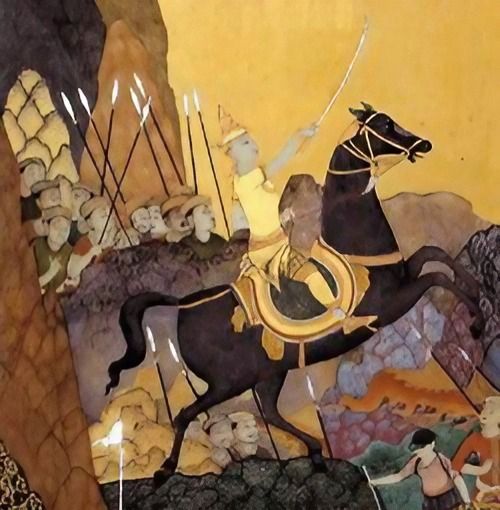
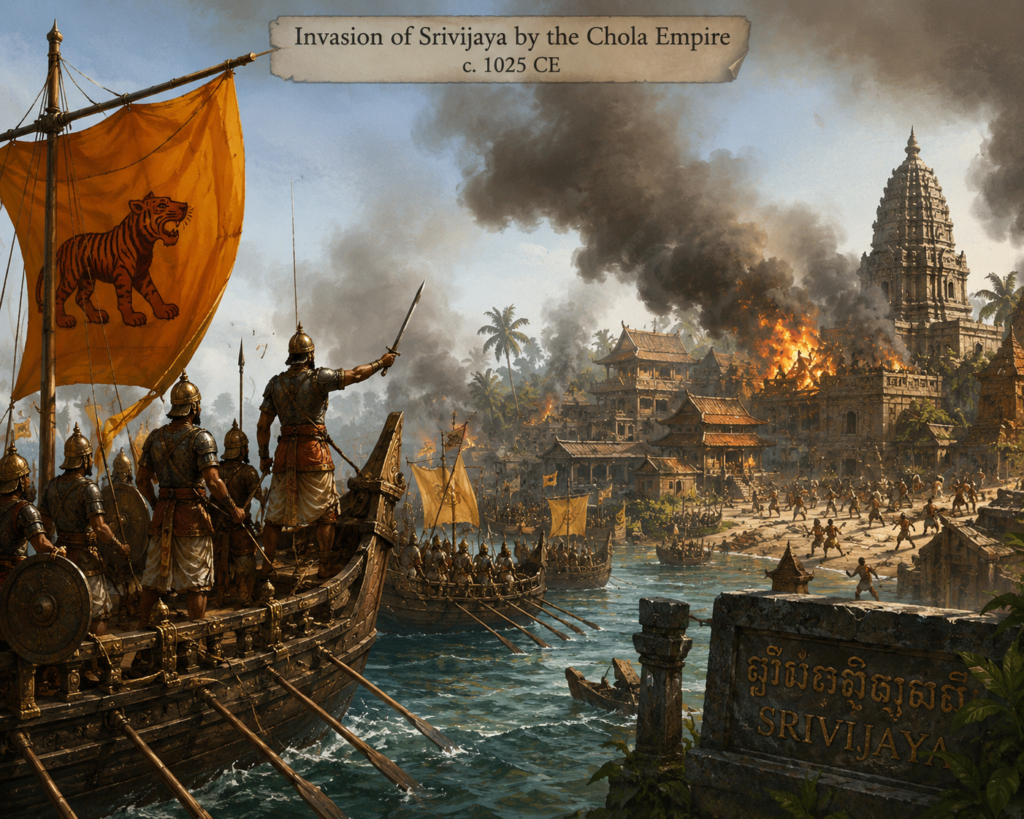
For nearly four centuries, Srivijaya had maintained its dominance over the sea lanes of Southeast Asia with remarkable consistency. Then, in 1025, a naval force arrived from southern India that would shatter that dominance in a single devastating campaign.
The Chola dynasty of South India — a new naval rival
The Chola Dynasty considered by many as one of the greatest naval powers of the medieval world. The kingdom built their own commercial empire across the Bay of Bengal and had long viewed Srivijaya as both commercial competitor and an obstacle in the sea routes connecting South India to China.
Prior to Chola incursions, the emperor or leader of Chola, Emperor Raja Raja I of Chola, had initially established relations with Srivijaya at that time. The relationship deteriorated as commercial competition intensified. Srivijaya’s control of the Strait of Malacca gave it the power to impose tolls and conditions on Indian merchants trading with China — conditions that the Chola rulers increasingly resented. When those commercial tensions combined with political rivalry, the result was war.
Rajendra Chola’s 1025 raid — the blow that broke Srivijaya’s dominance
The Srivijayan navy, stationed at Kedah (Modern-day Malaysia) was unaware of the Chola invasion approaching from the South. The Chola empire made a direct attack to Srivijaya’s capital of Palembang. The sudden assault allowed the Cholas to sack the city and plunder the Kadatuan royal palace and monasteries.
In 1025, Chola seized Palembang, captured the king and carried off his treasures, and also attacked other parts of the kingdom. The Thanjavur inscription records that Rajendra Chola captured King Sangrama Vijayottunggavarman of Srivijaya and seized treasures, including the Vidhyadara Torana, a jeweled “war gate” of Srivijaya.
The physical damage of the raid, while significant, was not the most important consequence. Despite their success, the Cholas did not establish lasting control over the captured cities, as the campaign primarily involved fast-moving raids and plunder. The attack did not end Srivijaya in an instant, but it destroyed Srivijaya’s aura of invincibility. The greatest maritime power in Southeast Asia had been caught off guard, its capital sacked, its king captured. Every tributary kingdom in the network took note. The empire that had made compliance profitable by guaranteeing protection had failed to protect even itself.
The fragmentation of the empire — tributary states break free
Having lost many soldiers in the war and with its coffers almost empty due to the twenty-year disruption of trade influence Srivijaya’s decline. Its territories began to free themselves from the suzerainty of Palembang and to establish many small kingdoms all over the former empire.
The Chola expedition as well as changing trade routes weakened Palembang, allowing Jambi to take the leadership of Srivijaya from the eleventh century on. The center of what remained of the Srivijayan commercial network shifted from Palembang to Jambi. It became a sign that the empire’s political coherence was dissolving even as some of its commercial infrastructure survived. Tributary kingdoms that had once found Srivijayan protection commercially valuable now found that protection unreliable — and began to explore alternatives.
The Chola raids coincided with a broader shift in Chinese commercial strategy. As the Song dynasty expanded China’s direct participation in maritime trade, they started to send its own merchant fleets rather than relying on intermediaries. Chinese merchants who had previously been obliged to trade through Palembang now had the option of sailing directly to the spice-producing regions of the archipelago, bypassing Srivijayan tolls entirely.
Javanese pressure — the rising threat from the east
While the Chola raids weaked Srivijaya and shifting trade routes, a new power was rising in Java. The Singhasari Kingdom, known as the predecessor of the great Majapahit Empire, launched the Pamalayu expedition in 1275. They sent a military and diplomatic mission into Sumatra that further undermined Srivijayan authority in its own heartland.
By the end of the 12th century Srivijaya had been reduced to a small kingdom, and its dominant role in Sumatra had been taken by Malayu, based in Jambi, a vassal of Java. The once-great maritime empire was contracting toward its original Palembang core — its commercial network fragmented, its naval power diminished, its political authority confined to a fraction of what it had once commanded.
The Fall of Srivijaya: Majapahit, Malacca, and the End of an Era (13th–14th Century)
The final chapter of Srivijaya’s history unfolded slowly, not in a single dramatic defeat but in a gradual dissolution. It left the empire’s former territories to be absorbed by the rising powers that would define the next era of Southeast Asian history.
Majapahit’s rise and the conquest of Srivijaya’s territories
In the 14th century, the territory of Palembang fell under the influence of the Javanese Majapahit Empire. Majapahit, the great Hindu-Buddhist empire whose full story we tell in our article on the Majapahit Empire — incorporated Srivijaya’s former Sumatran territories into its own vast commercial and political network. The Palembang that had once been the capital of the greatest maritime empire in Southeast Asia became a provincial outpost of a Javanese imperial system.
Majapahit’s own vision of Nusantara, articulated in Gajah Mada’s Palapa Oath, was in many ways the heir of Srivijaya’s maritime commercial model. Both empires sought to unite the islands of the archipelago under a single political and commercial authority. Majapahit simply achieved it through a combination of military force and maritime power that Srivijaya, in its weakened state, could no longer contest.
The spread of Islam along the trade routes
Alongside Majapahit’s territorial expansion, the spread of islam became another force that reshaped the history of Southeast Asia. Arab and Indian Muslim merchants had been trading in the ports of the archipelago for centuries, bringing their faith alongside their commerce. As Srivijaya’s Buddhist commercial empire weakened, the Islamic merchant networks that had long operated within it began to establish their own politically autonomous base. From there, Islam began its remarkable expansion across Maritime Southeast Asia.
The Buddhist civilization that Srivijaya had patronized and protected — the monastery at Palembang where a thousand monks once studied, faded with the empire that had sustained it. In Bali alone did the Hindu-Buddhist tradition that had flourished under Srivijaya and Majapahit survive intact — a living remnant of a world that Islam would reshape entirely.
The final collapse — Srivijaya disappears from the records

Srivijaya would remain a forgotten kingdom following its disappearance. After Srivijaya fell, it was largely forgotten. There was no dramatic final battle, no memorable last stand, no single moment of collapse that history could point to. The empire simply contracted, fragmented, and dissolved. Its former commercial network absorbed by rivals, its political authority evaporated, its physical presence so modest that future generations would struggle to find evidence it had ever existed.
However, the most remarkable postscript to Srivijaya’s story is the founding of Malacca. The man who established the Malacca Sultanate around 1400, Prince Parameswara was a prince for Palembang, the ancient capital of Srivijaya. Fleeing Majapahit’s dominance, he carried with him the maritime commercial traditions and political instincts of the civilization that Srivijaya had built.
In founding Malacca at the narrowest point of the strait that Srivijaya had once dominated, Parameswara recreated the essential Srivijayan model: control the chokepoint, offer merchants safety and fair trading conditions, build wealth from the flow of commerce rather than the ownership of territory. Malacca’s golden age, in many ways follow the Srivijaya’s model in a new era and a new faith. The full story of how Parameswara built his maritime empire is told in our article on the Malacca Sultanate.
Legacy: Why Srivijaya Still Matters Today
Why Srivijaya was forgotten — the empire that left no ruins
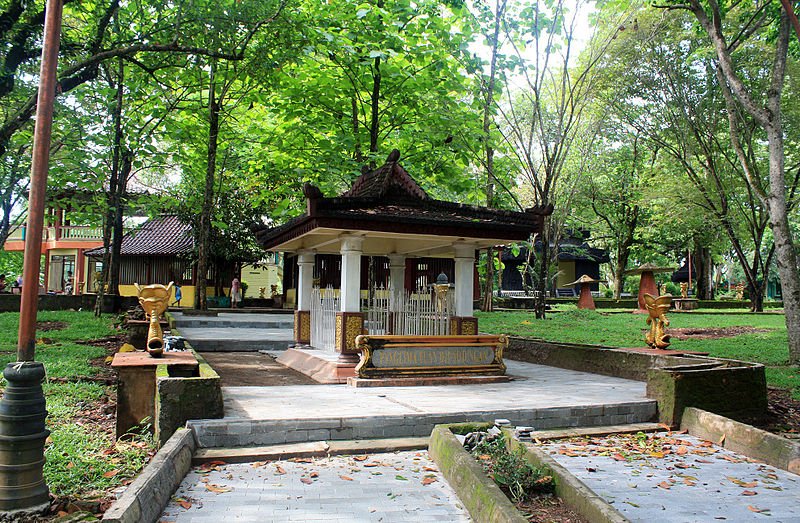
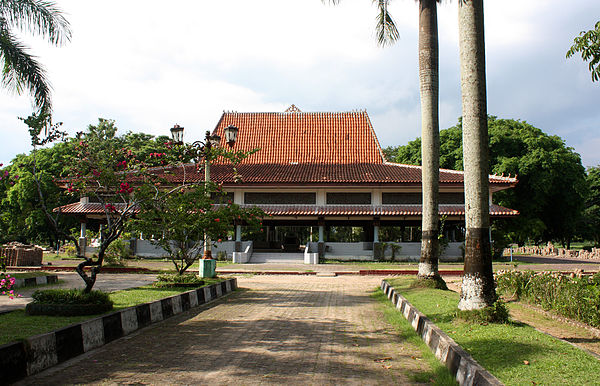
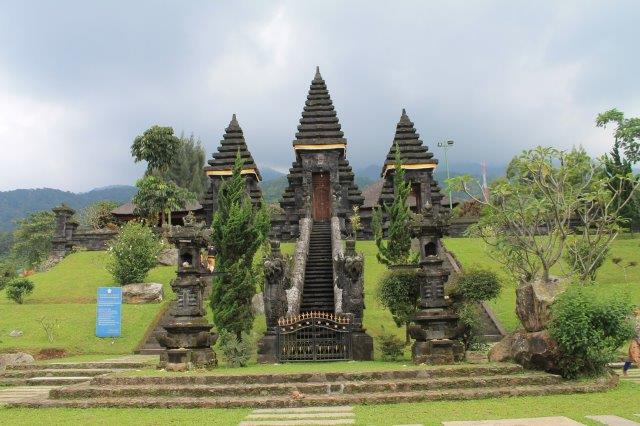
The most fundamental reason Srivijaya was forgotten is architectural or rather, the absence of it. Unlike Angkor Wat in Cambodia or Borobudur in Java, Srivijaya left almost no monumental stone structures. Its buildings were constructed of wood and organic materials that dissolved in the tropical heat and humidity over the centuries. Moreover, Its inscriptions were relatively few and scattered. Its commercial records, if they existed at all, have not survived.
An empire that ruled through the control of trade rather than the administration of territory leaves behind a different kind of legacy. Not stone monuments but linguistic patterns, commercial traditions, religious networks, and cultural practices that dispersed across the maritime world it once dominated and became impossible to attribute to any single source.
George Coedes and the 1918 rediscovery
The modern rediscovery of Srivijaya is one of the most fascinating stories in the history. For centuries, Chinese sources referred to a great Sumatran kingdom they called Sanfoqi, but historians could not agree on what it was or where it had been located. In 1918, French scholar George Coedès published a landmark paper systematically connecting the Chinese references, the Sanskrit inscriptions found in Sumatra, and the Arab geographical accounts into a coherent picture of a single, previously unrecognized empire. Srivijaya , the kingdom that had dominated Southeast Asia for six centuries was formally introduced to the modern world more than five hundred years after it had disappeared.
Srivijaya’s influence on Malay language and Buddhist culture

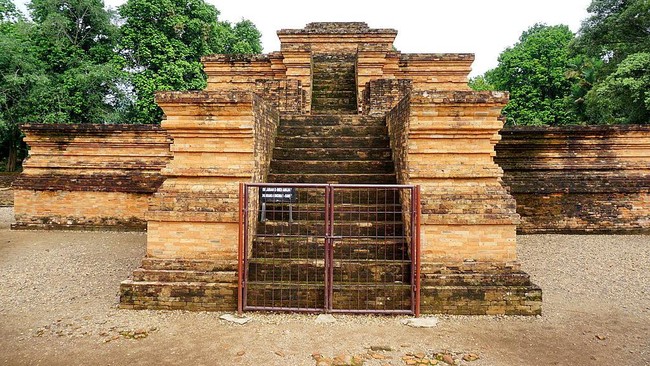
Old Malay written in Pallava script became the official language of administration and trade across the Srivijayan commercial network. This standardization of Old Malay as the lingua franca of Maritime Southeast Asian commerce was one of Srivijaya’s most enduring contributions to the region. The language became foundation on which the Classical Malay of the Malacca Sultanate, and ultimately the Bahasa Malaysia and Bahasa Indonesia of two modern nations, was built.
The Buddhist scholarship that flourished in Srivijayan Palembang left traces across the Buddhist world of Southeast and East Asia. In the monastery records of Chinese pilgrims, in the Sanskrit inscriptions of Sumatra, and in the Buddhist traditions of the Malay world that Islam would eventually transform but never entirely erase.
Modern Indonesia and the Srivijaya Empire legacy
Modern Indonesia’s relationship with Srivijaya is complex and deeply felt. The empire is claimed as a foundational chapter of Indonesian national history. Proof that the archipelago has been home to sophisticated, commercially advanced, internationally connected civilizations for over a thousand years before European colonialism arrived. The Srivijaya Air airline, one of Indonesia’s major carriers, takes its name from the empire — carrying the memory of the maritime kingdom into the modern age of flight.
Palembang itself has been the subject of ongoing archaeological excavation, with artifacts, inscriptions, and structural remains gradually revealing more about the city that once sat at the center of the medieval world’s most important trade network. Every discovery adds another piece to the picture of a civilization that was genuinely extraordinary.
Before Majapahit built its empire, before Malacca controlled the strait, before Dutch ships arrived in the archipelago, before any of the stories that HistoFreak has told across its Indonesia cluster — there was Srivijaya. The forgotten kingdom that built everything that came after.
References
Fabrizio Musacchio (2025) Srivijaya: A Buddhist maritime empire in Southeast Asia. Available at: https://www.fabriziomusacchio.com/weekend_stories/told/2025/2025-10-26-srivijaya/
Christie, J. (1990) ‘Srivijaya History Review’, Journal of Southeast Asian Studies, 21(2), pp. 453–454. DOI: 10.1017/S002246340000343X
Pott, P.H. (1998) ‘Dissolving Hegemony or Changing Trade Pattern? Images of Srivijaya in the Chinese Sources of the Twelfth and Thirteenth Centuries’, Journal of Southeast Asian Studies, 29(2), pp. 295–308. DOI: 10.1017/S0022463499000149
Seasia.co (2026) How Srivijaya Controlled Asia’s Trade Routes for Six Centuries Without a Large Land Army. Available at: https://seasia.co/2026/06/12/how-srivijaya-controlled-asias-trade-routes-for-six-centuries-without-a-large-land-army
Facts and Details (n.d.) SRIVIJAYA KINGDOM: HISTORY, BUDDHISM, TRADE, ART. Available at: https://factsanddetails.com/indonesia/History_and_Religion/sub6_1a/entry-3940.html