
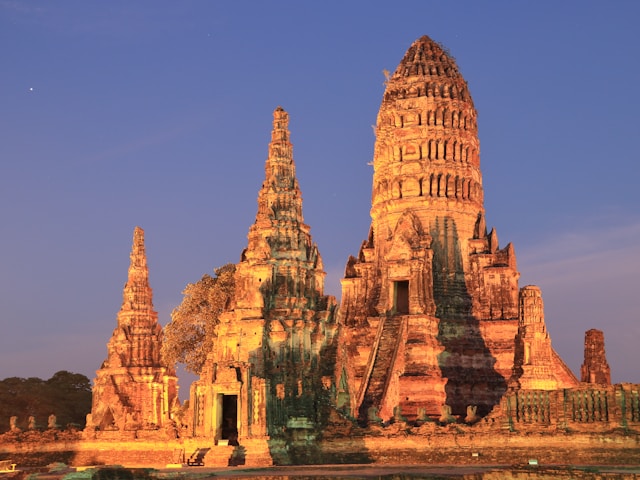
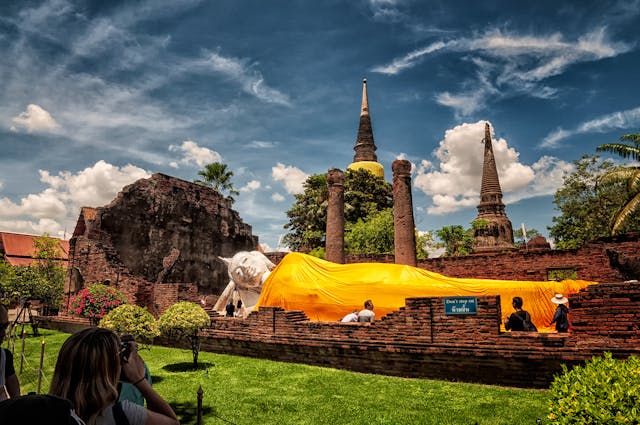
The Rise of Ayutthaya
Founded in 1351 by King Ramathibodi I, the Ayutthaya Kingdom quickly grew into one of the most powerful states in Southeast Asia. Positioned at the confluence of three rivers — the Chao Phraya, the Lopburi, and the Pa Sak — the kingdom controlled vital trade routes connecting China, India, and the Malay Peninsula. This geographic advantage transformed Ayutthaya from a modest principality into a thriving commercial and political powerhouse within a few generations.
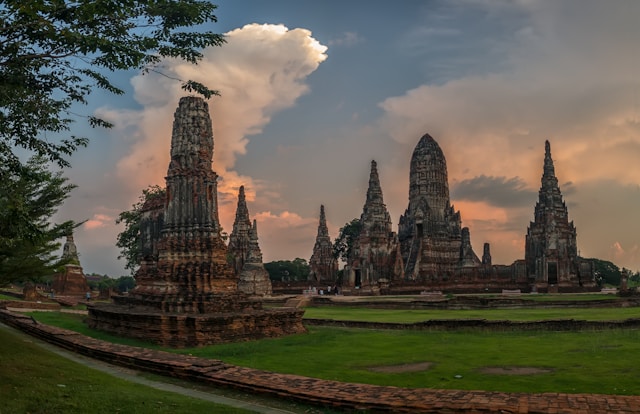
At its peak, Ayutthaya was among the largest and wealthiest cities in the world. European merchants and diplomats who visited the capital were astonished by its scale and grandeur, comparing it favorably to Paris and Venice (Harrington, 2004). The city was a spectacle of gilded palaces, towering temple spires, and bustling waterways lined with merchant vessels from across Asia and Europe.
Beyond its wealth, people regarded Ayutthaya as a sophisticated political state. Kings ruled as divine figures, drawing both Hindu and Buddhist traditions to legitimize their authority. The kingdom developed an elaborate bureaucratic system, codified legal framework, and a standing army that allowed it to dominate neighboring kingdoms including Sukhothai, Lanna, and parts of the Khmer Empire. For over four centuries, Ayutthaya maintained its dominance through a careful balance of military strength, diplomatic marriages, and strategic trade alliances.
The Burmese Invasion of Siam
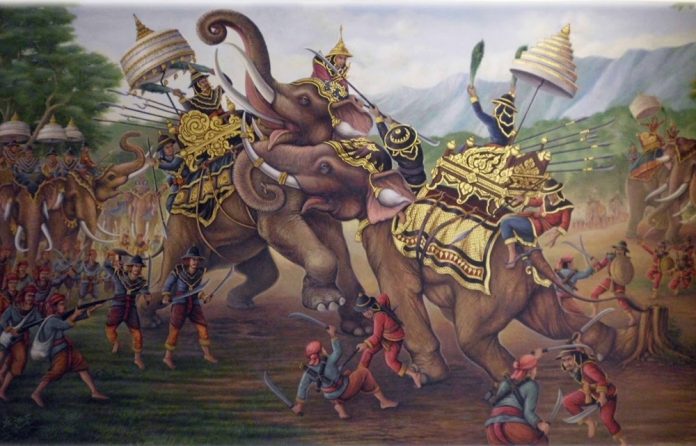
Peace in the region was never permanent. A deep-rooted rivalry between the Burmese and Siamese kingdoms had shaped Southeast Asian geopolitics for centuries, with both powers fiercely coompeting for territory, trade routes, and regional prestige.
The first major blow came in 1569, when King Bayinnaug of Burma successfully conquered Ayutthaya and reduced it to a vassal state. The humiliation did not last long, King Naseruan the Great rallied Siamese forces and restored Siam independence through a series of military campaigns. Under his command, the Siamese forces defeated the Burmese crown prince in personal elephant combat at the Battle of Nong Sarai in 1593. Up to this day, the event remains one of the most celebrated events in Thai national memory.
Yet the respite proved temporary. In 1763, the ambitious King Hsinbyushin ascended the Burmese throne with a determination to expand his empire. After successful campaigns in Manipur and against Chinese incursions in the north, he turned his full attention toward Siam. In 1765, he launched a coordinated two-pronged invasion, sending armies along both the northern and southern routes to converge on the Ayutthayan capital.
In 1765, King Hsinbyushin divided his army into 2 routes, the Northern and Southern routes. These 2 divisions launched a massive and coordinated attack on Ayutthaya. The Northern division successfully conquered Chiang Mai and other Northern Siamese regions. On the other hand, the Southern division advanced from the South and conquered territories along the Malay Peninsula and Gulf of Thailand.
The Final Siege of 1767
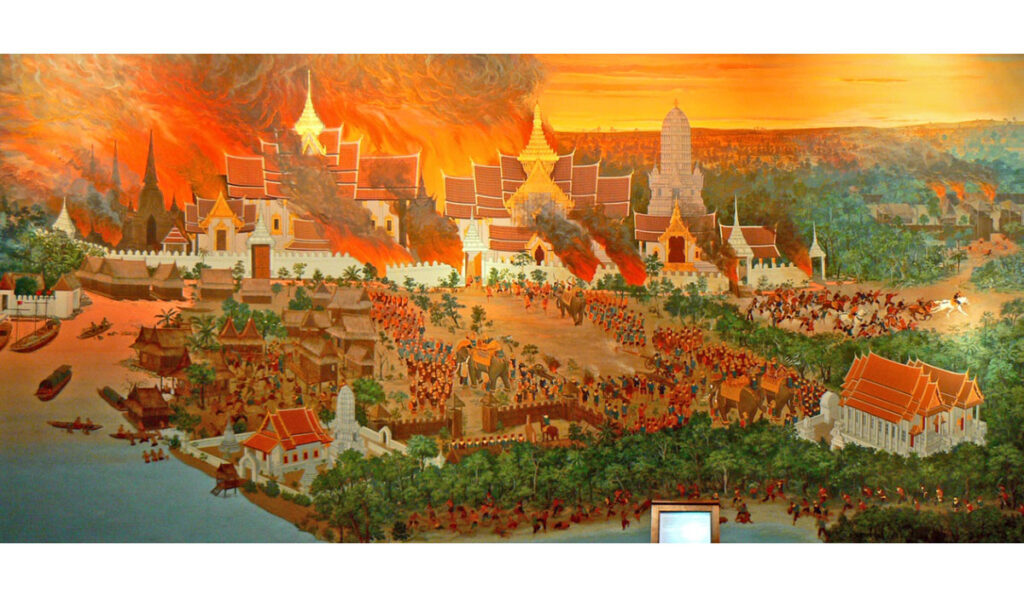
By early 1766, the two Burmese divisions had encircled the capital. Rather than risk open battle, the Burmese adopted a methodical siege strategy — cutting off supply lines, isolating the city from the countryside, and slowly starving Ayutthaya into submission. The Siamese defenders, relying on their fortifications and walls, found themselves in an increasingly desperate situation as food stocks dwindled and morale collapsed.
The Burmese constructed three fortified positions surrounding the city, each standing roughly 4.5 meters high, and began digging tunnels toward Ayutthaya’s defensive walls. In a bold counter-offensive, King Ekkathat dispatched ten thousand soldiers to storm these positions. The Siamese initially breached the outer perimeter but were driven back when Burmese reinforcements arrived in time to prevent a complete collapse.
On 7 April 1767, the end came. Burmese forces used their tunnels to set fire to the northeastern section of Ayutthaya’s walls. At nightfall, a large section collapsed and the Burmese army poured into the city. The remaining Siamese defenders made their final stand inside the citadel, but the outcome was beyond reversing.
Aftermath: The destruction of Ayutthaya Kingdom
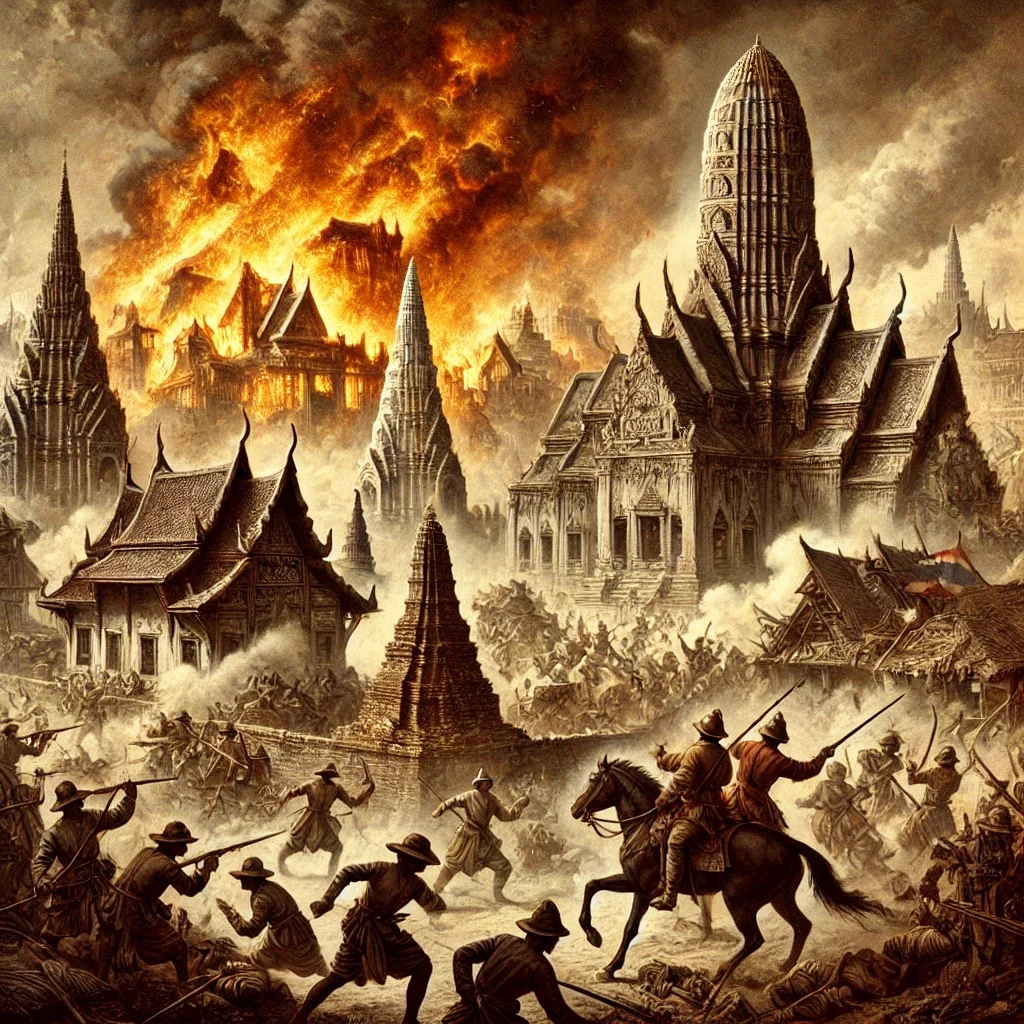
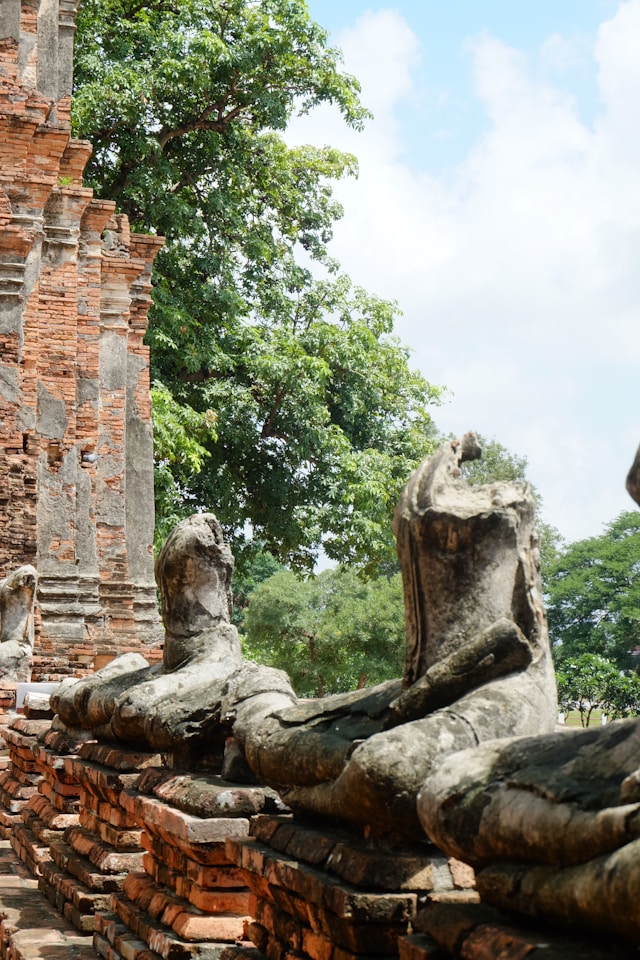
The sack of Ayutthaya was devastating. Burmese forces applied scorched-earth tactics throughout the city, burning palaces, looting temples, and melting down gold Buddha statues. The Burmese destroyed Royal manuscripts, Buddhist scriptures, and historical records , creating a cultural rupture that Thai historians still grapple with today. They wiped out centuries of accumulated wealth, scholarship and artistic achievement in a matter of days.
According to local sources, the Burmese forces killed King Ekkathat while attempting to flee through the city’s western gate. In addition, the Burmese captured Siamese nobility — minister, royal family members, and skilled artisans to Burma. After the invasion, the Burmese left one of the wealthiest cities in Asia in ruin.
Legacy: How Ayutthaya Shaped Modern Thailand
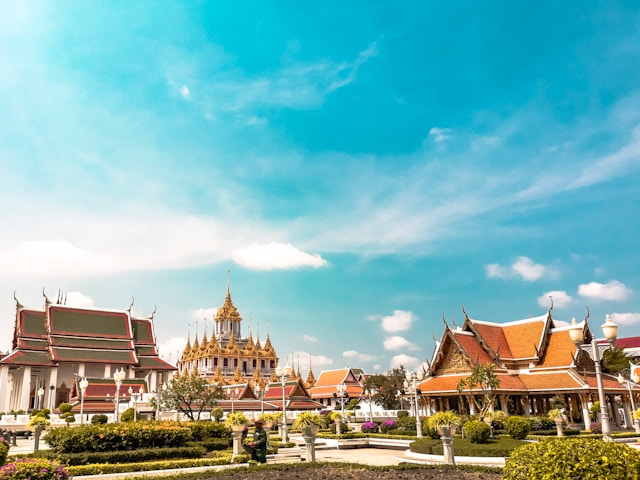
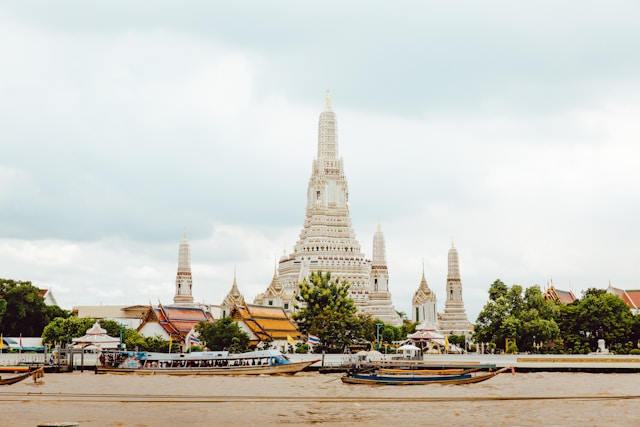
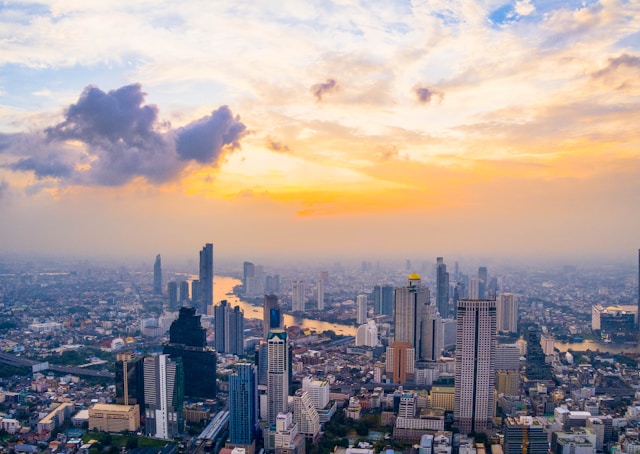
The fall of Ayutthaya marks one of the most traumatic chapters in Thai history — yet its legacy proved remarkably durable. Within fifteen years, General Taksin had expelled the Burmese occupiers and reunified the Siamese territories. His successor, King Rama I, founded the Chakri dynasty in 1782 and established Bangkok as the new capital. He deliberately modeled the new city on the lost city of Ayutthaya. The layout of the Grand Palace, major temples, and the network of canals that once defined Bangkok’s skyline were all conscious tributes to the fallen capital.
Influence on Monarchy and political culture.
The institution of divine kingship that Ayutthaya developed over four centuries continues to underpin Thailand’s constitutional monarchy today. The reverence accorded to the Thai royal family, the elaborate court ceremonies, and the strict lèse-majesté laws protecting the monarchy all trace their roots directly to Ayutthayan political culture.
Influence on Religion and identity.
Ayutthaya was the great center of Theravada Buddhism in mainland Southeast Asia. The kingdom sent monks across the region, codified Buddhist law, and built hundreds of temples that became models for religious architecture throughout Thailand, Laos, and Cambodia. Buddhism remains central to Thai national identity today, and many important rituals and traditions originated from the Ayutthayan kingdom.
Influence on Arts, literature, and cuisine.
Much of what is considered distinctly Thai in art, classical dance, literature, and cooking originated in Ayutthaya. The royal court was a major patron of the arts, and despite the destruction of 1767, enough survived. Through oral tradition, exiled artisans, and Burmese-captured manuscripts later returned — to form the foundation of modern Thai cultural heritage
A UNESCO World Heritage site.
Today, the ruins of Ayutthaya draw millions of visitors each year. Designated a UNESCO World Heritage Site in 1991, the ancient city serves as a powerful reminder of Southeast Asia’s rich pre-colonial civilizations. The city became a testament to the resilience of a people who rebuilt their kingdom from the ashes. If you’re planning to explore Southeast Asia’s most important historical sites, Ayutthaya is an essential stop — read our guide to SEA Historical Sites You Should Visit Before You Die.
References
https://www.renown-travel.com/historicalsites/ayutthaya/history.html
Ayutthaya – Thailand’s Forgotten Capital
https://visitworldheritage.com/en/buddha/historic-city-of-ayutthaya/0b451a5d-b923-4858-b7de-74c30cf3e01b
Harrington, Jane Therese (2004) ‘Being here’: heritage, belonging and place making: a study of community and identity formation at Avebury (England), Magnetic Island (Australia) and Ayutthaya (Thailand). PhD thesis, James Cook University.