
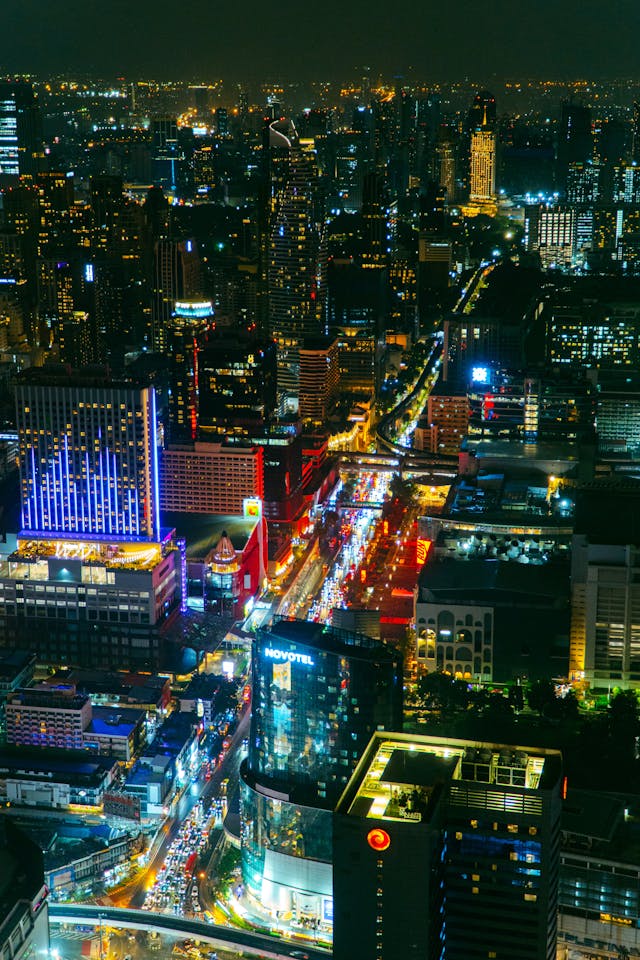
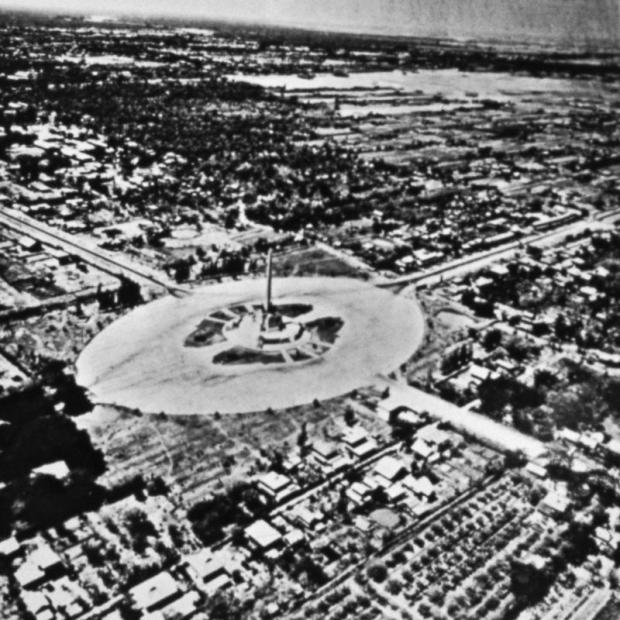
History of Bangkok started from a humble beginning and not considered as a proper city in the past. For much of history, Bangkok started from a little more than a muddy riverside outpost at the edge of a greater kingdom. A place called as Bang Makok, named after the wild olive plum trees that grew alongside its banks.
Every year, more than 30 million international visitors visited Bangkok, making it the most visited city on the planet in 2025. In 2025, Bangkok surpassed global cities like London, Paris and Dubai. Behind the rooftop bars, golden temples, and chaotic expressways lies one of Southeast Asia’s most extraordinary urban stories.
How did this humble trading post become of the world’s great capitals? The answer runs through fallen empires, visionary kings, wars, revolutions and act of national reinvention. This is the full story of Bangkok — from its origins in the shadow of Ayutthaya to its status as Thailand’s eternal, irreplaceable heart.
Key Facts: Bangkok at a Glance
| Official Thai name | Krung Thep Maha Nakhon (กรุงเทพมหานคร) |
| Full ceremonial name | 168 characters — the world’s longest city name |
| Founded as capital | 21 April 1782 by King Rama I |
| Ruling dynasty | Chakri dynasty (1782 — present) |
| Population | 11.4 million (city) / 17.4 million (metro, 2024) |
| Most visited city | 30.3 million international visitors (2025) |
| Unique distinction | Only major SEA capital never colonized by Europeans |
Before Bangkok: The Ayutthaya Era and Birth of Bang Makok
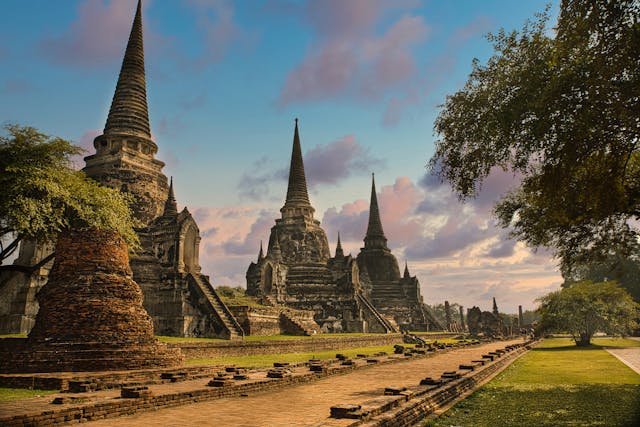
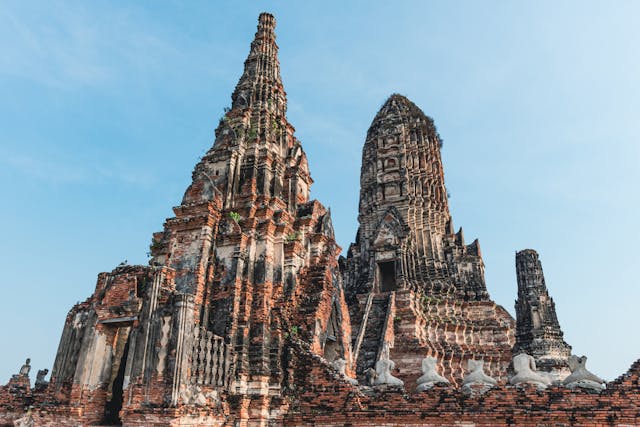
To understand Bangkok, you first need to understand what came before it. Bangkok did not emerge in one night from the wilderness. It grew slowly over centuries, as a small outpost of much greater civilization!
Bang Makok – the trading post and its origin
Bangkok traces its roots to a small trading post during the Ayutthaya era in the 15th century. The settlement called as Bang Makok – “Bang” meaning village or settlement near water, and “Makok” known as a tree. It was an unremarkable name for an unremarkable place. It serves as a custom posts and way station on the Western bank of the Chao Phraya River, serving the great Ayutthaya kingdom forty miles upstream.
For most of Ayutthaya period, Bang Makok existed primarily as a gateway. It became the point where goods flowing in from the Gulf of Siam entered the Siamese territory. Ships from China, Persia, India and Europe passed through its waters. Despite its strategic location, nobody would have predicted it would be one day become one of the world’s great cities.
Bangkok as Ayutthaya’s gateway to the sea
As Ayutthaya grew into the wealthiest and most powerful kingdoms in the region, the settlements along the lower Chao Phraya grew important alongside it. Bang Makok and the surrounding areas, became increasingly significant as trade hubs, military positions, and administrative centers connecting the capital to the outside world.
The river itself became the lifeblood of the entire Thai civilization. Everything moved by water — goods, soldiers, diplomats, traders, and messages. Controlling the Chao Phraya river meant controlling Siam’s connection as to the outside world. Bang Makok sat at the critical point where the river met the sea.
The fall of Ayutthaya and its impact on Bangkok
Then came the catastrophe that changed everything. In 1767, after a fourteen-month siege, Burmese forces of the Konbaung dynasty broke through Ayutthaya’s defense and sacked the grand city. The Burmese wiped out centuries of accumulated wealth, art, scholarship, and architectural in only a few days. The greatest city in Southeast Asia left burning in ruin. The destruction left the river settlements downstream, including Bang Makok cut loose from the civilization that had given them the meaning. (For the full story of Ayutthaya’s rise and fall, read our article on the Ayutthaya Kingdom.)
King Taksin and the Thonburi Interlude (1767-1782)
The next chapter of Thailand’s history filled by one of the most remarkable stories in Southeast Asian history. The story of survival, leadership, and national rebirth that set the stage for Bangkok’s founding.
Taksin’s rise from general to king
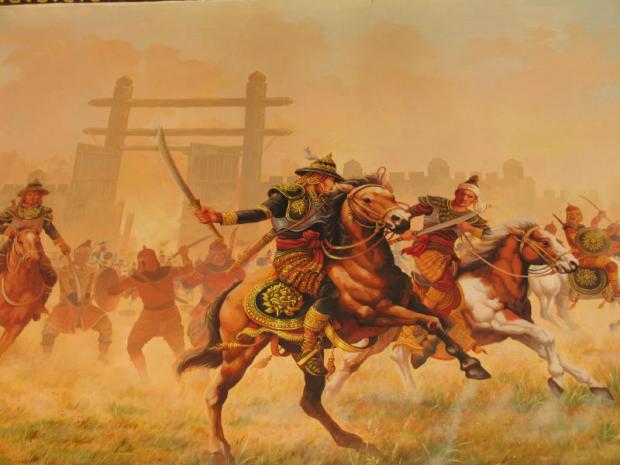
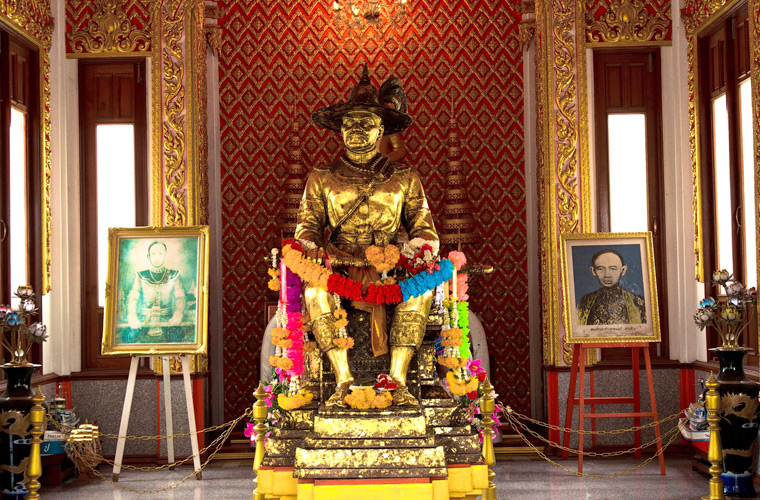
Among Siamese who escaped the fall of Ayuthhaya, was a military commander of Chinese-Siamese descent named Taksin. Within months of the invasion, Taksin rallied surviving forces and driven the Burmese out of the region. He began the extraordinary task of reassembling a shattered Siamese kingdom.
By 1768, he crowned himself king, an astonishing achievement by a man who just months earlier had been a provincial governor watching his civilization collapse. As a military genius, he launched series of bold campaigns, reunified the Siamese territories and reasserted control over Laos and Cambodia. He also rebuilt the kingdom’s administrative infrastructure from scratch.
Why Thonburi, not Ayutthaya, was chosen as the new capital
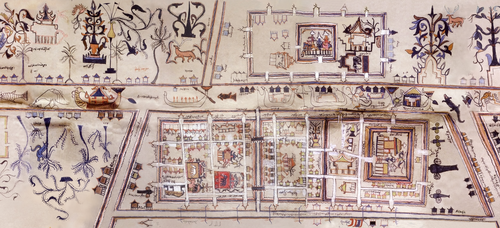
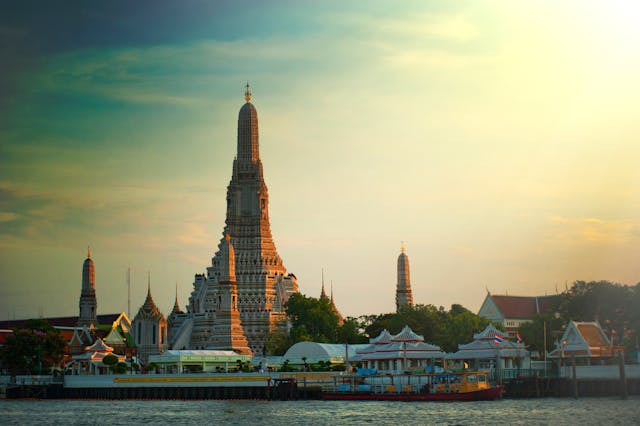
Rather than attempting to rebuild the old capital, Taksin chose the new capital at Thonburi. Located at the west bank of the Chao Phraya river near the old Bang Makok settlement. Taksin believed that Thonburi had defensive advantages — closer to the sea, easier to supply by ship, and surrounded by the river’s natural protective curves. It was a pragmatic choice for a king who needed speed and security above all else.
Thonburi became a functioning capital — with palaces, temples, and a court — but it always felt provisional. It was a wartime capital built for survival, not for permanence or grandeur.
The fall of Taksin and the rise of Rama I
Taksin’s greatness did not last long, he ended up going mad. The precise nature of his breakdown remains debated by historians. Some suggest genuine mental illness, while others believed political manipulation by rivals. By 1782, his behavior became so erratic that his own court moved against him. He was deposed and later executed, ending one of of the most extraordinary reigns in Thai history.
Into the power vacuum stepped on of Taksin’s most brilliant generals. A man known as Chao Phraya Chakri, seized power in April 1782 and assumed the throne. He immediately made a decision that change Thailand forever, by moving the capital from Thonburi to Bangkok.
The Founding of Bangkok: Rama I and the Rattanakosin Kingdom (1782)
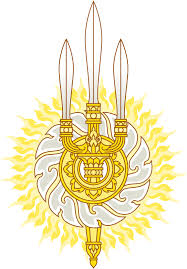
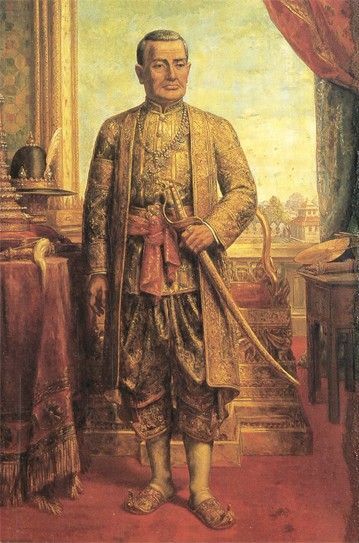
The official foundation date of Bangkok is 21 April 1782 when the city pillar was consecrated in a ceremony. It is one of the most significant dates in Thai history — the birth of a city that has never stopped growing.
Why Rama I moved the capital east across the river
The move appears to have been dictated by strategic considerations: the bend of the river constituted a wide moat guarding the northern, western and southern perimeters of the new site. To the east stretched vast swampy delta that could only be traversed with great difficulty. The new site on the East bank was simply more defensible compared to Thonburi.
Not only on defense, Rama I envisioned a city that would not only be a fortress but a symbol of Siam’s resilience. He wanted to make a settlement that shows glory of Ayutthaya would live again. And the most importantly, a new dynasty had risen to carry the torch of Thai civilization forward.
Constructing the Grand Palace and Wat Phra Kaew
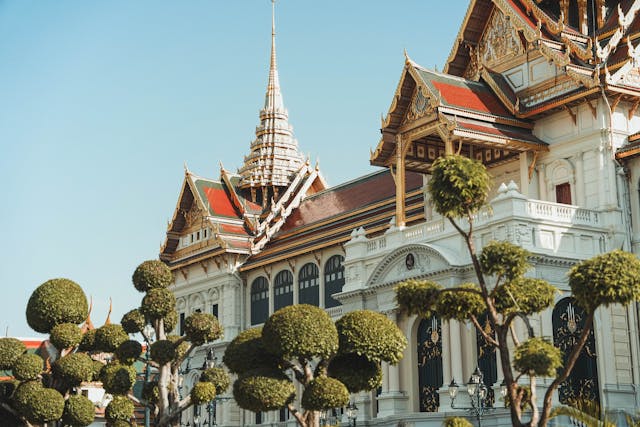
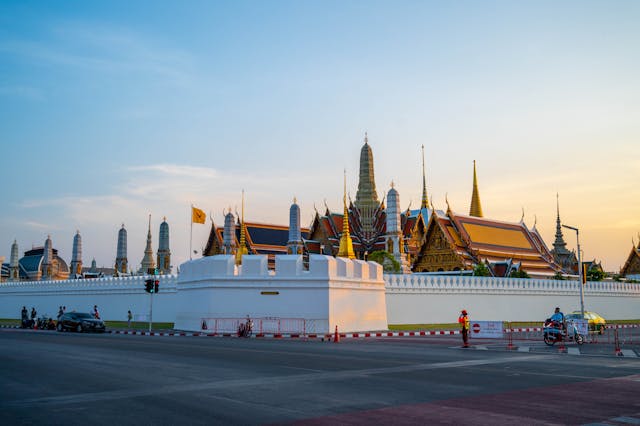
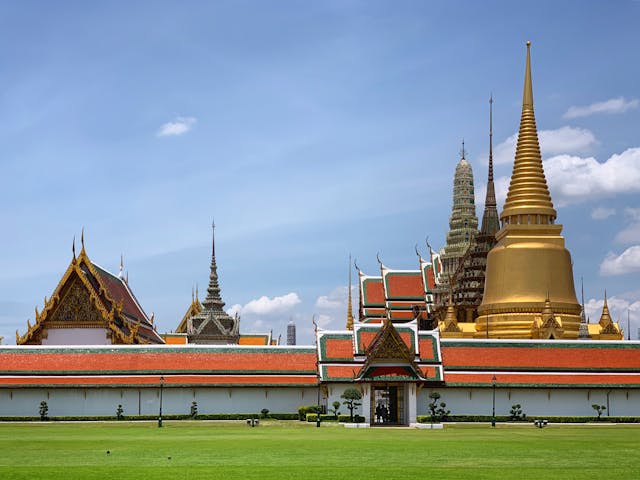
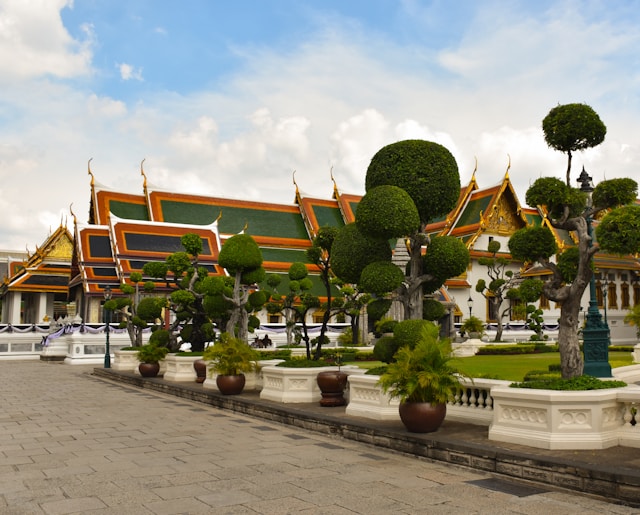
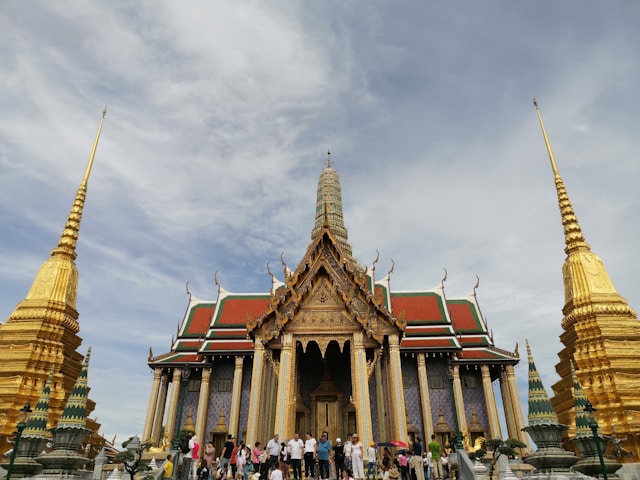
In 1784, the Chakri dynasty completed the construction of Grand Palace and Wat Phra Kaew. In addition, the dynasty transferred the Emerald Buddha from Wat Arun to be placed in Wat Phra Kaew. Rama I brought thousands of workers including Lao and Cambodia laborers to build city canals, walls, palaces, and temples. They also took bricks from the ruins of Ayutthaya and brought downriver to build the new capital.
Rama I modeled the new city on the former capital, Ayutthaya. By the end of his reign the city was established, and a new city wall — perhaps the most imposing structure — skirted the river and Khlong Ong Ang to the east; it was 4.5 miles long, 10 feet thick, and 13 feet high.
The canal network of Bangkok
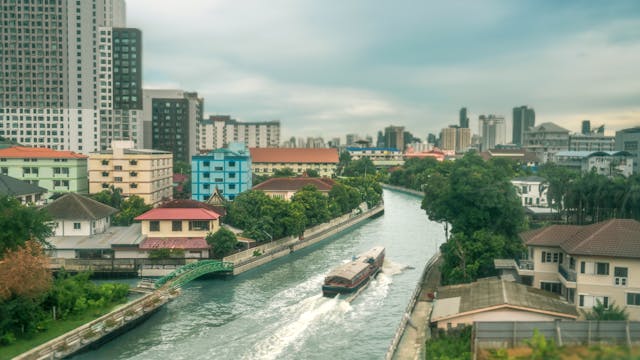
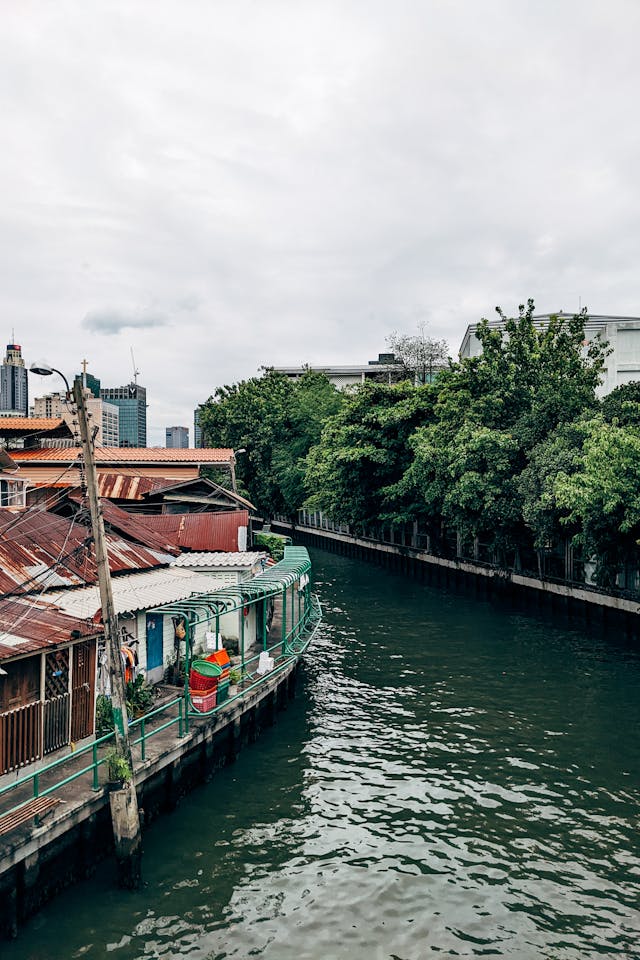
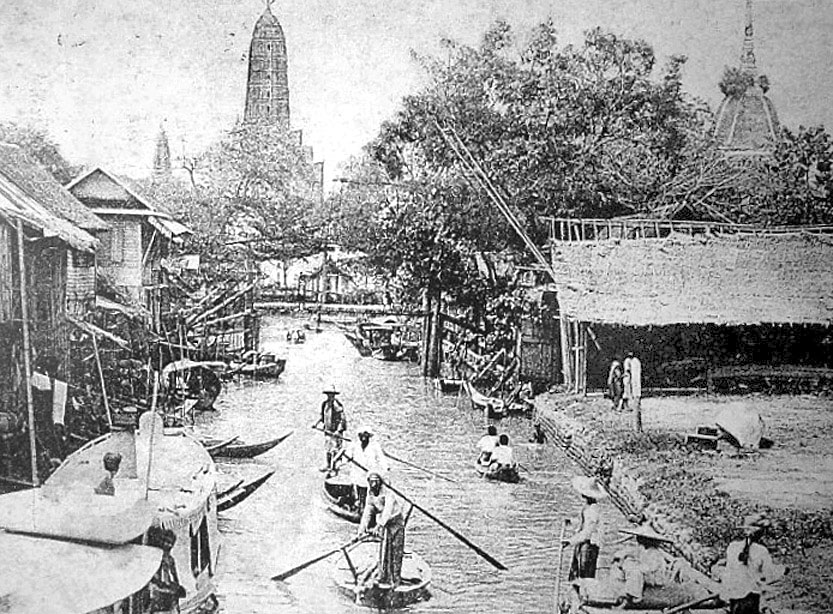
The extraordinary network of canals or “the khlongs” became the most distinctive feature of early time of Bangkok. It served as roads, water supply, drainage systems, and market arteries. The city was designed around waterways in the same way that Venice or Amsterdam was, and the effect was striking enough that European visitors consistently compared Bangkok favorably to those great canal cities. At its peak in the 19th century, Bangkok had more canals than Venice, and virtually all commercial and daily life happened on or near the water.
Bangkok’s full ceremonial name – the world’s longest city name
When Rama I named his new capital, he did not do so modestly. He named his new capital Krung Thep Maha Nakhon Amon Rattanakosin Mahinthara Ayutthaya Mahadilok Phop Noppharat Ratchathani Burirom Udomratchaniwet Mahasathan Amon Piman Awatan Sathit Sakkathattiya Witsanukam Prasit. The 168-letter-long name has broken the Guinness World Record as the longest name for a place. In everyday use, Thais call their capital Krung Thep — “City of Angels” — while the rest of the world continued using the old name Bangkok, whose origins remain charmingly unclear.
The Reform Kings: How Bangkok Modernized without being Colonized (1851-1910)
This chapter of Bangkok set the city apart from every capital cities in Southeast Asia. It became the most under-appreciated story in the region’s story. By the mid-19th century, European colonial powers had carved up most of Asia between them. The British controlled India, Burma, and Malaya. The French controlled Indochina and, Dutch ruled Indonesia and the Spanish controlled the Philippines.
Every major Southeast Asian civilization had been subjected to European colonial rule — except one. Thailand and its capital Bangkok remained free. Understanding why requires understanding two extraordinary kings.
Rama IV (King Mongkut) – Opening Thailand to the West
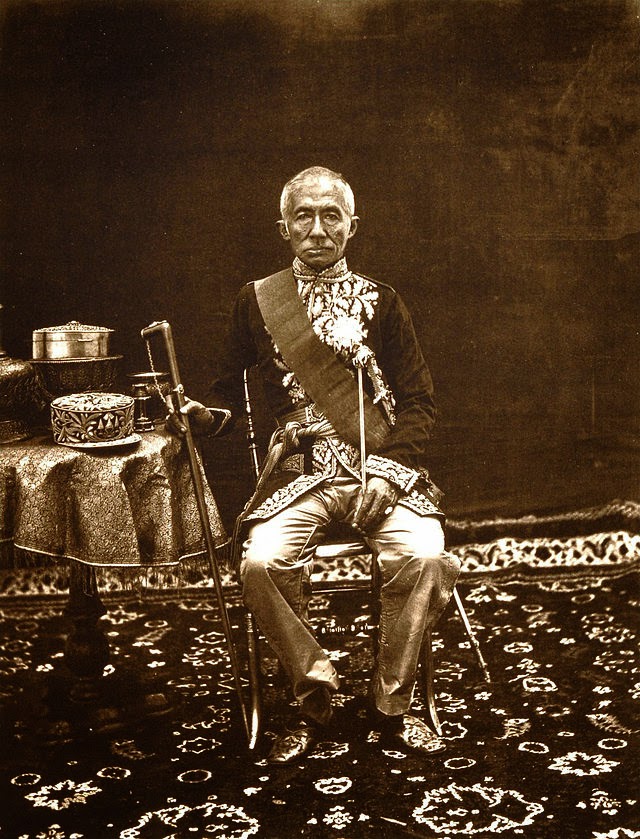
King Mongkut or known as Rama IV from 1851 to 1868, became the most remarkable rulers of the 19th century. He spent 27 years as a Buddhist monk before ascending to the throne. The king taught himself in Latin, English, and science, he developed sophisticated understanding if Western civilization and its intention toward Asia.
He understood that European powers would not be resisted through sole military force alone. King Mongkut realised that the Siam’s military power was no match for British or French firepower. Only strategic engagement could save his kingdom from colonization.
Mongkut opened Thailand to Western trade and diplomacy, signing treating with Britain and France. He gave up certain privileges in exchange for preserving the Siamese sovereignty. He hired western advisors, introduced western science and technology, and began careful modernization of Thailand. In essence, King Mongkut played a long game, giving enough to satisfy European appetites without surrendering his kingdom itself.
The Anna and the King story – fact vs fiction
Mongkut’s reign is familiar to Western audiences through the romanticized story of Anna Leonowens. Anna known as the British governess who taught his children and whose memoirs formed the basis of the musical “The King and I.” The real history is considerably more nuanced. Anna did serve at the Siamese court and did teach the royal children, but her memoirs took significant liberties with the facts, portraying Mongkut in ways that Thai historians consider deeply unfair. The real King Mongkut was a sophisticated, self-educated monarch who dealt with the existential threat of colonialism with considerable skill — far more interesting than any stage musical’s version.
Rama V (King Chualongkorn) – railways, roads, and reform
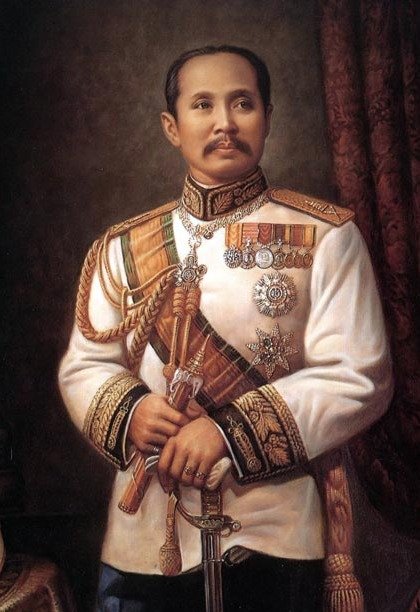
If Mongkut set the strategy, his son Chualongkorn or Rama V, executed it with breathtaking ambition. Reigning from 1868 to 1910, Chulongkorn widely regarded as Thailand’s greatest modernizing king and one of the most consequential rulers in Southeast Asian history.
When King Chualongkorn ascended the throne as King of Siam in 1868, he decided to embrace many European and Western ideas. Under pressure from western imperialists, old tributary kingdoms of Siam such as Laos and Cambodia fell under French control. Rama V began close contact with western powers to avoid colonization.
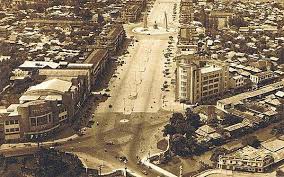
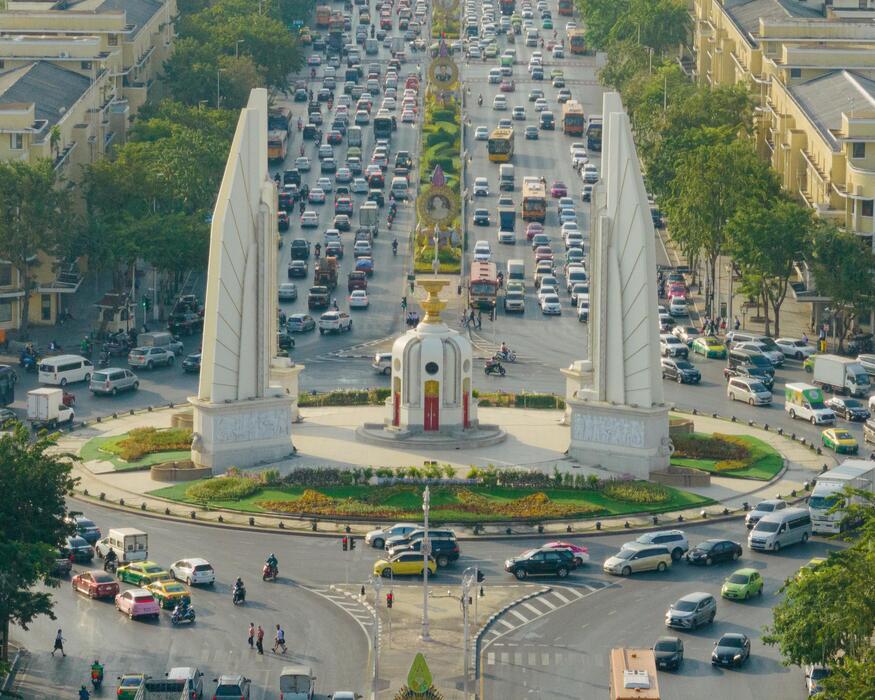
Under the new King, Bangkok experience rapid transformation beyond recognition. A post and telegraph service was organized in the 1880s, an electric tram service was instituted on Charoen Krung in 1892, and the first line of the State Railway, running from Bangkok to Phra Nakhon Si Ayutthaya, opened in 1900. Construction of European-style boulevards completed in this era, most famously known as the Ratchadamnoen avenue, modeled on the Champs-Élysées. Construction of hospitals, schools, and government ministeries also completed during King Chualongkorn’s era.
Why Thailand alone escape colonization
Combination of geography, diplomacy, and extraordinary leadership became the main contributors of Thailand to escape colonization. Thailand served as a useful buffer zone between British Burma and Malaya to the west and south, and French Indochina to the east — neither power wanted the other to control it. King Mongkut and King Chulalongkorn exploited this position brilliantly, playing the two powers against each other while modernizing fast enough to maintain credibility as a sovereign state. Bangkok became the main evidence on which this drama played out, it bears the mark in the blend of Thai and European architectural styles that still defines the old city.
History of Bangkok in the 20th century: The world’s most visited city and what lies ahead
The 20th century brought Bangkok through a series of turbulences that reshaped the city and the nation.
The 1932 revolution – From absolute to constitutional monarchy
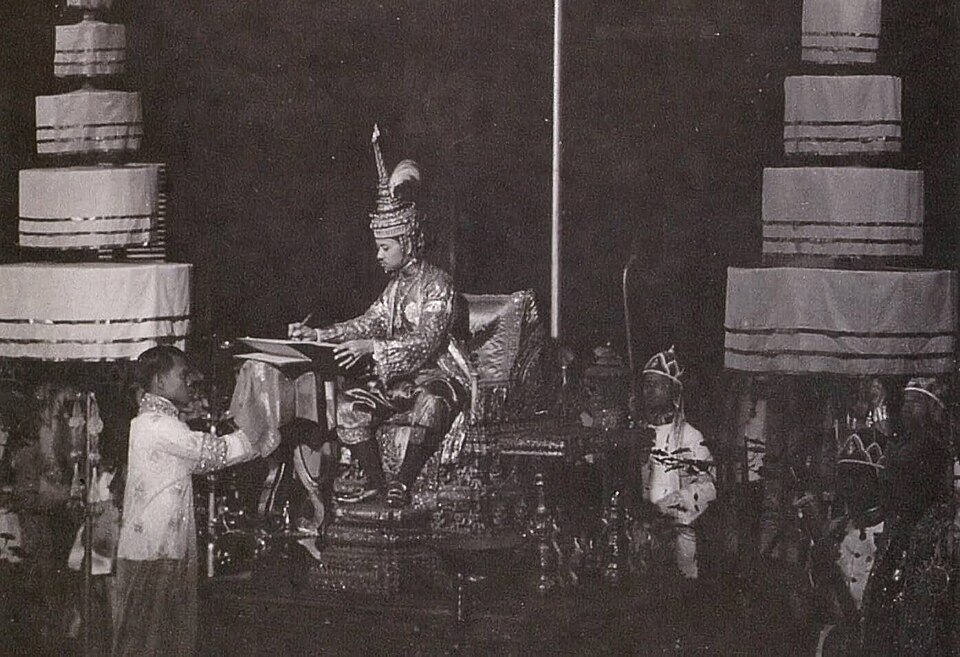
In June 1932, a group of foreign-educated students and military men called the Promoters carried out a bloodless coup, seizing power and demanding that King Prajadhipok grant the people of Siam a constitution. The king agreed and granted the power to the people in December 1932. This automatically ending almost exactly 150 years of absolute Chakri rule.
The revolution transformed Bangkok’s political character overnight. The absolute monarchy that had built and shaped the city for 150 years replaced by a constitutional system. In 1939, the country officially changed its name from Siam to Thailand, and Bangkok became the capital of a nation with a new modern identity.
History of Bangkok in WW2 – Thailand’s unique position as Japanese ally
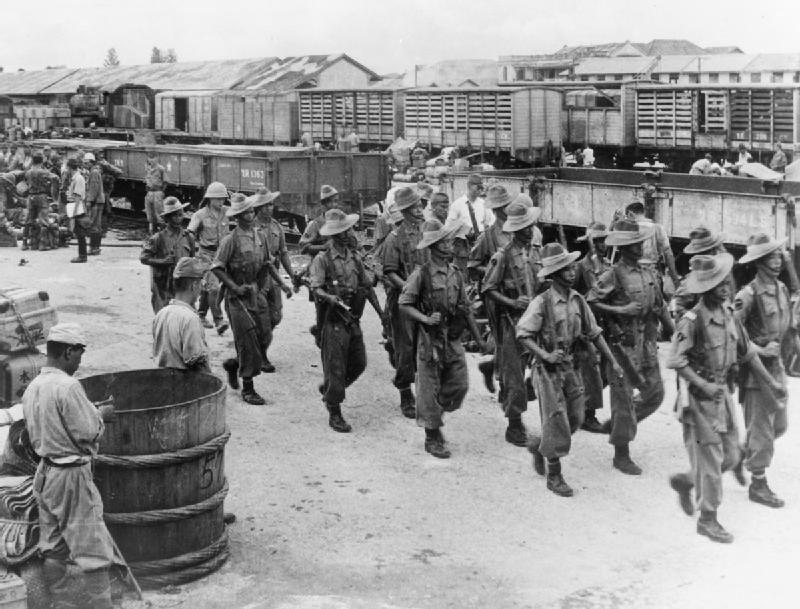
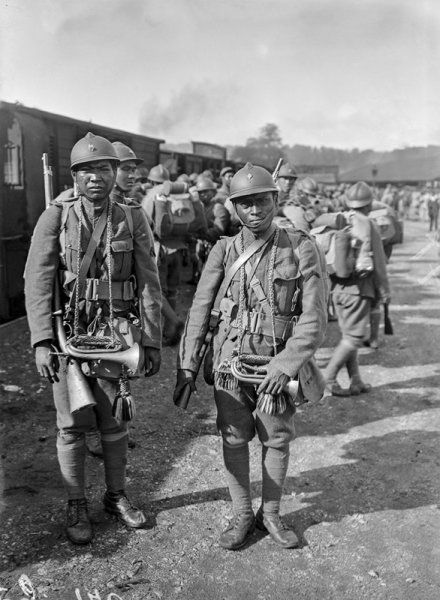
When Japanese forces swept through Southeast Asia in December 1941, Thailand faced an impossible choice. The Japanese army appeared on the border demanding passage — and the Thai government, led by Prime Minister Plaek Phibunsongkhram, made the controversial decision to allow it rather than face certain military defeat. Thailand became a nominal Japanese ally, and Bangkok became a Japanese base of operations.
The decision saved Bangkok from the physical destruction that devastated Manila, Rangoon, and Singapore — but it came at a moral and political cost. The allied forced bombed Bangkok in several occasions between 1941 and 1945. A Thai resistance known as the Free Thai Movement, emerged during this period. When Japan surrendered in 1945, wartime conduct required careful diplomatic navigation to avoid being treated as a defeated enemy nation.
The American era – Cold War Bangkok and US military presence
Following the end of the war, Thailand signed a peace treaty with the US and were promised protection during the later Vietnam War. Bangkok became a major American military hub during the Vietnam War era — a city of military bases, R&R facilities, and Cold War intrigue. American investment poured in, Western culture flooded the city, and Bangkok’s economy and physical landscape changed dramatically. The city began its transformation from a canal-based, low-rise, temple-dominated city into a modern Asian metropolis.
Economic boom of the 1980s-90s and Urban explosion
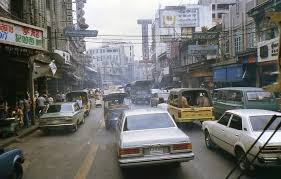
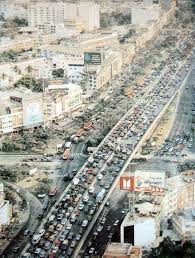
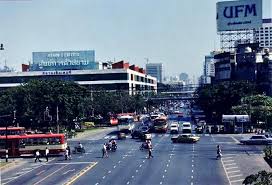
The Asian investment boom in the 1980s and 1990s led many multinational corporations to locate their regional headquarters in Bangkok. During this period, the city grew at staggering pave, swallowing surrounding provinces, filling in its canals with concrete roads, and throwing up high-rise buildings across what had once been rice paddies. The population exploded from around 1 million in the 1950s to over 10 million by the 1990s. Bangkok became Southeast Asia’s dominant commercial city — chaotic, congested, and endlessly energetic.
Bangkok Today: The World’s Most Visited City and What Lies Ahead
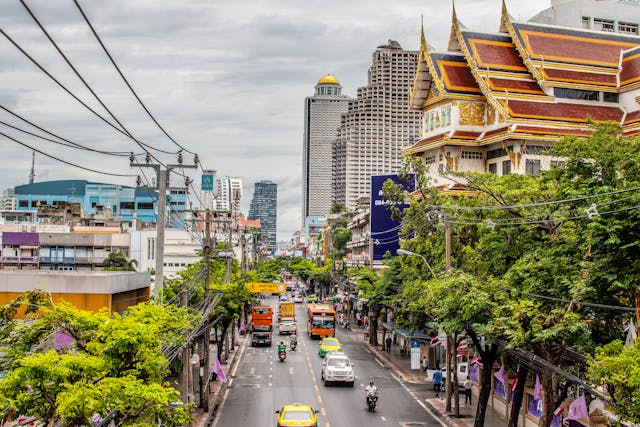
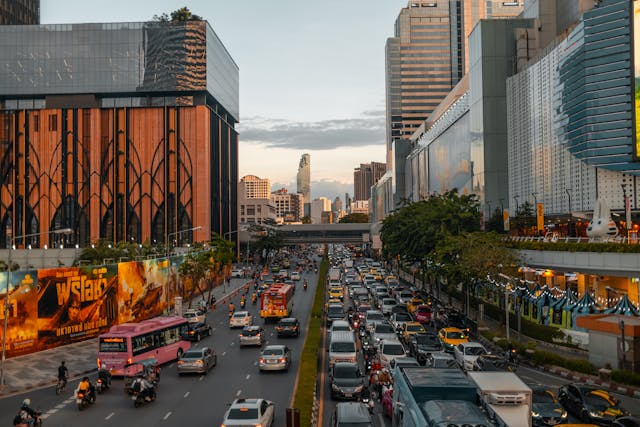
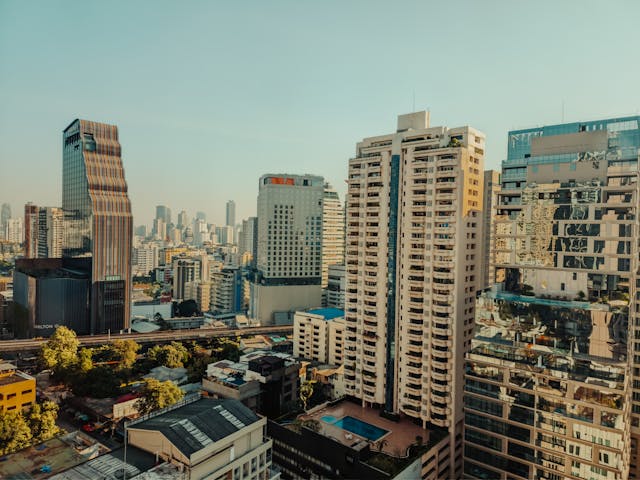
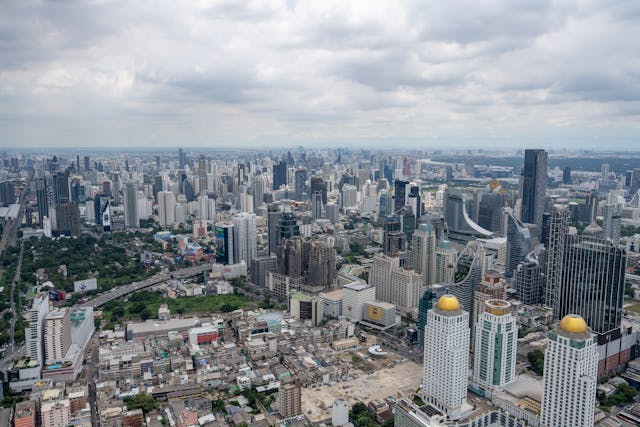
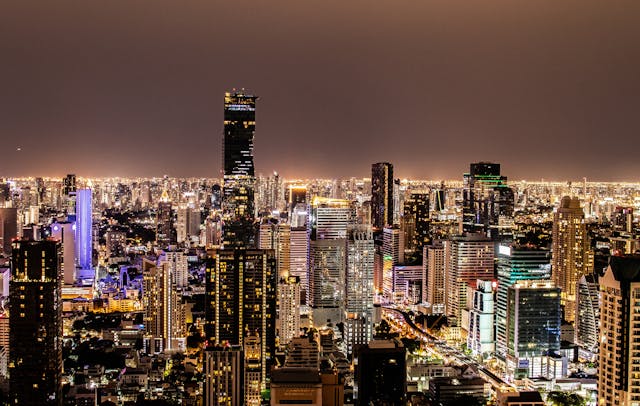
The city of Bangkok in 2025 became a global city with staggering contrasts. Ancient temples located beside glass skyscrapers, street food markets beneath elevated expressways, royal ceremonial avenues choked with traffic. The city occupies 1,568.7 square kilometres in the Chao Phraya River delta and has an estimated population of 11.4 million people as of 2024, with over 17.4 million people living within the surrounding Bangkok Metropolitan Region.
30.3 million visitors only in 2025
Bangkok’s status as the world’s most visited city in 2025 — with 30.3 million international arrivals — reflects its extraordinary appeal as a destination where ancient civilizations and modern Asian energy coexist in one place. Travelers come for the temples, the food, the nightlife, and shopping. Moreover, the unique culture of Thailand became the most compelling reason to visit Bangkok. These 2500 years of civilization are still visible, tangibly present in the skyline, the ceremonies, and the daily life of its people.
Modern Bangkok – MRT, skyline and urban transformation
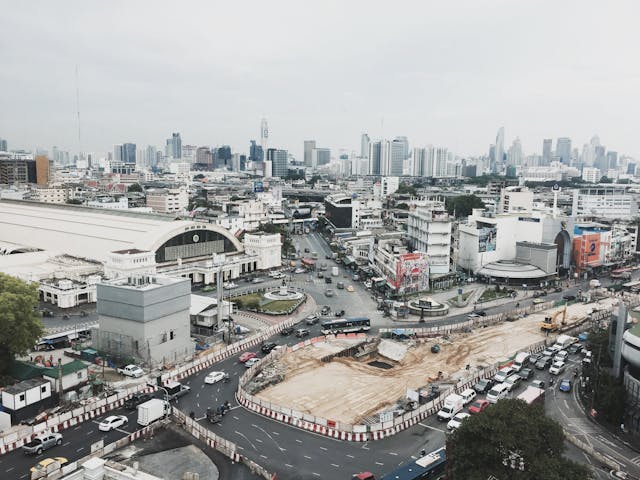
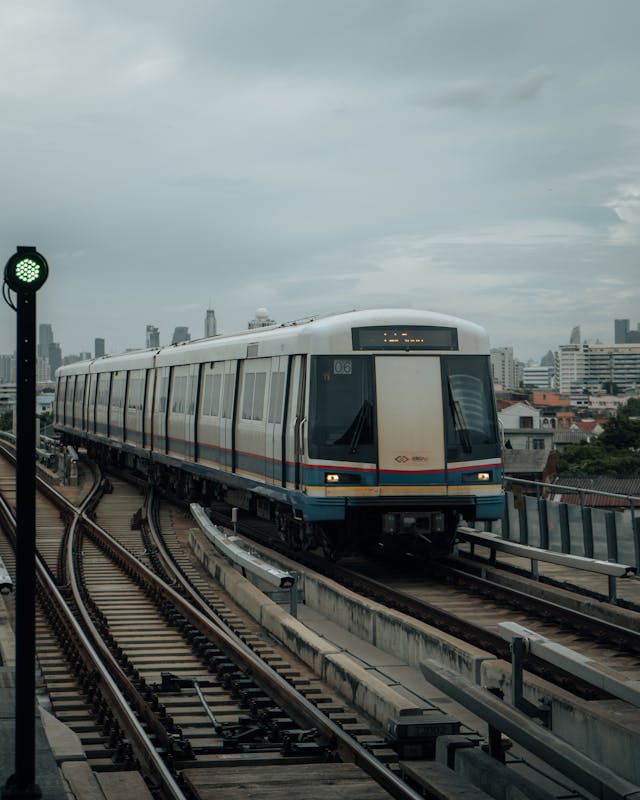
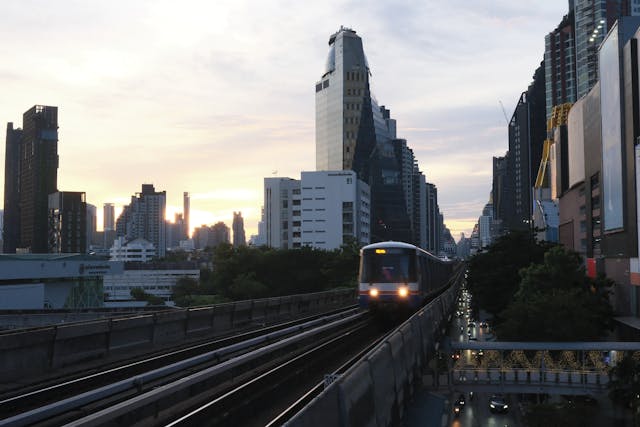
The 21st century saw a dramatic transformation of Bangkok’s infrastructure. The BTS Skytrain and MRT underground metro have created a modern rapid transit network that connects the sprawling city in ways the old canal system never could. New financial and commercial districts — Sathorn, Silom, Sukhumvit — have emerged as world-class business destinations. The riverside has been reimagined with museums, hotels, and cultural venues that celebrate the city’s history while embracing its future.
Flooding and climate threats – Bangkok’s sinking challenge
Bangkok faces a serious long-term threat that its gleaming skyline cannot hide. The city is sinking in some areas by as much as 2 centimeters per year. The main reason of sinking mainly caused due to decades of excessive groundwater extraction and the weight of its built environment on the soft delta soil. Combined with rising sea levels driven by climate change, this creates a genuine flood risk for low-lying parts of the city over the coming decades. The same challenge faces Jakarta — whose response has been to build an entirely new capital, Nusantara. (Read our full story on Jakarta’s transformation and the Nusantara relocation here.)
Legacy: How History of Bangkok Represents Southeast Asia
Bangkok is more than a capital city. It became a symbol of what Southeast Asian civilization achieved on its own terms. Without colonial interruption, through combination of military resilience, diplomatic genius and the quite confidence of a culture that understand its own value.
Bangkok as the only uncolonized SEA capital
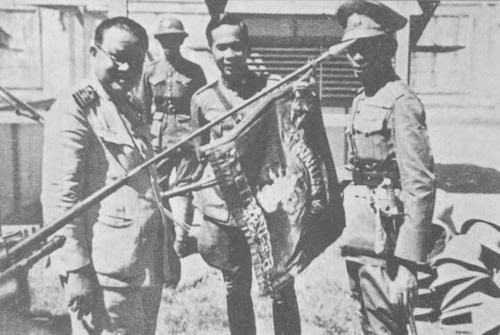
Of the four great capitals in HistoFreak’s Southeast Asian city series — Kuala Lumpur, Jakarta, Manila, and Bangkok — only Bangkok was never ruled by a European colonial power. KL was shaped by the British, Jakarta by the Dutch, Manila by the Spanish and Americans. Bangkok alone remained in Thai hands throughout the colonial era — a distinction that shaped its architecture, its institutions, its political culture, and its national psychology in profound ways. Thais carry a quiet pride in this fact that permeates their relationship with their capital city and their history. (Explore the colonial histories of our other capitals: Kuala Lumpur, Jakarta, Manila.)
The Chakri Dynastry – continuity from 1782 to today
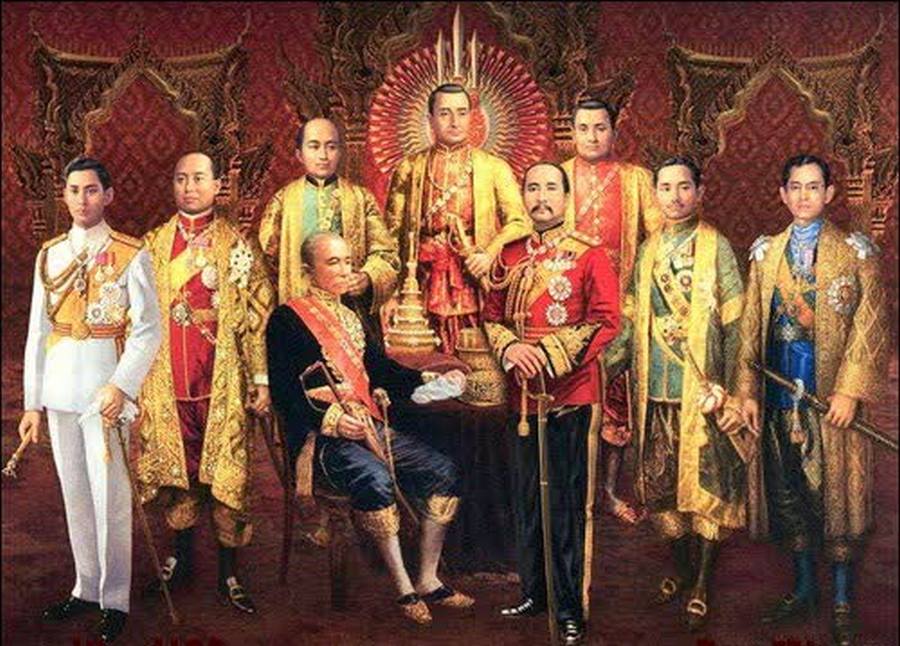
The Chakri dynasty, founded by Rama I in 1782, reigns to this day — making it one of the longest continuously reigning royal houses in the world. Rama I laid the foundation of the Chakri dynasty and modern Thailand, providing a stable monarchical lineage that underpins the nation’s political continuity and symbolic national identity. The current king, Rama X, is the tenth monarch of the same dynasty that built the Grand Palace, dug the khlongs, and stood down the European empires. In Bangkok’s temples, palaces, and ceremonies, that 243-year-old lineage is not history — it is living present.
Bangkok’s place in the SEA capital cities story
The history of Bangkok is inseparable from the story of Southeast Asia. Its founding marked the end of one era and the beginning of another. Its survival throughout colonial period demonstrated what Southeast Asian civilization could modernize on its own terms. B angkok’s growth into one of the world’s great megacities proved that the region’s potential was always there — waiting for the right moment to be realized.
From Bang Makok’s wild olive plum trees to 30.3 million annual visitors, Bangkok’s journey is Southeast Asia’s journey — complex, resilient, endlessly fascinating, and far from finished. To this day, Bangkok continues to write the next chapter of its own history.
References
Cambridge University Press (n.d.) A history of Thailand. Available at: https://assets.cambridge.org/97811074/20212/frontmatter/9781107420212_frontmatter.pdf (Accessed: 2 May 2026).
Chulalongkorn University Digital Collections (n.d.) Historical evolution of Bangkok (1782–1910). Available at: https://digital.car.chula.ac.th/cgi/viewcontent.cgi?article=9877&context=chulaetd (Accessed: 2 May 2026).
Introducing Bangkok (2023) History of Bangkok – From tiny village to top tourist destination. Available at: https://www.introducingbangkok.com/history (Accessed: 2 May 2026).
Oouyyanont, P. (n.d.) Industrialization of Bangkok before the Second World War. Available at: https://apebhconference.wordpress.com/wp-content/uploads/2009/08/ouyyanont.pdf (Accessed: 2 May 2026).
Piyamas Lernapakun (n.d.) The forgotten heritage of the Rattanakosin Area. Available at: https://www.cujucr.com/downloads/Individual%20Articles/9/vol9%20Piyamas%20Lernapakun.pdf (Accessed: 2 May 2026).
Tourism Authority of Thailand (n.d.) National Museum. Available at: https://www.tourismthailand.org/Attraction/national-museum (Accessed: 2 May 2026).