
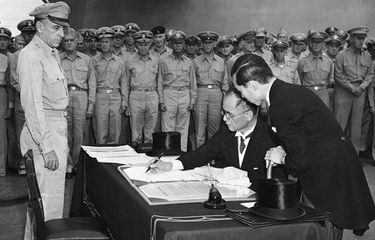
When Japan surrendered on 15 August 1945, hundreds of thousands of Japanese soldiers across Southeast Asia began the long journey home. Most obeyed their orders, laid down their weapon and waited for repatriation. However, in the jungle and cities of Indonesia, approximately 1,000-3,000 Japanese soldiers made a different choice.
They refused to go home and put their weapons back on. They decided to join the Indonesian independence movement to fight the European power returning to the archipelago. The role of the Japanese veterans in Indonesian National Revolution largely overlooked. The Japanese deserters provided tactical leadership, weapons, and training to the new Indonesian forces.
Some considered these armies as the zanryu Nihon-hei, the Japanese soldiers who stayed behind. In Japan they were long labeled dasso Nihon-hei — Japanese deserters. In history books on either side of the world, they appear only in footnotes, if at all. This is their story of one of the most remarkable and least-told stories of the entire decolonization era.
Japan in Indonesia: Occupation, PETA, and an Unexpected Legacy (1942–1945)
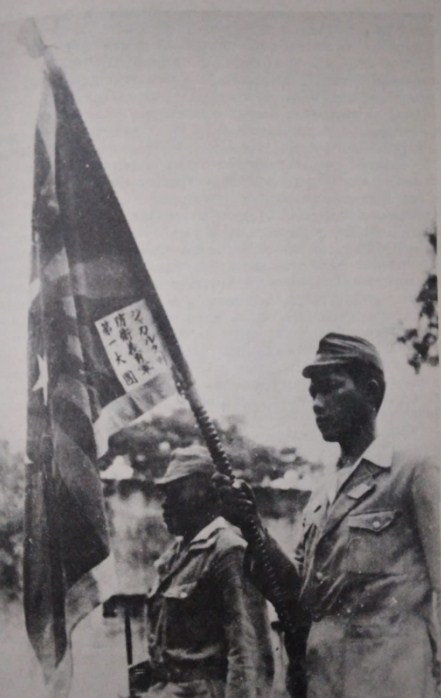
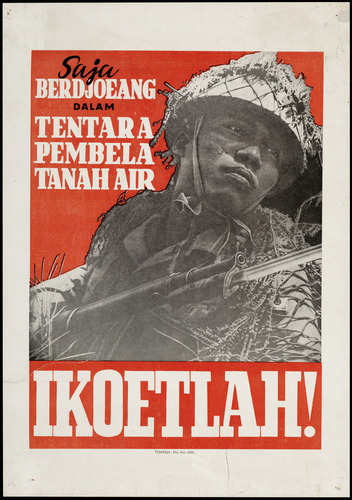
To understand why some Japanese soldiers chose to fight for Indonesian independence, you first need to understand what three and a half years of Japanese occupation had done to the relationship between Japanese soldiers and Indonesian society.
The Occupation That Dismantled Dutch Authority
When the Japanese forces wept through the Dutch East Indies in 1942, they accomplished their objective in only a few weeks to destroy the Dutch authority. The Dutch military surrendered in March 1942 with their officials interned in concentration cap. At the first time in 300 years, the infrastructure if Dutch power, administrators, military was absent from Indonesian life.
Japan did not replace Dutch colonialism with Indonesian freedom. It replaced it with Japanese imperialism of forced labor, resource extraction, and harsh military administration that caused enormous suffering across the archipelago. But the occupation had unintended consequences that would prove transformative for the independence movement.
PETA — training Indonesians to fight
The most vital role of Japanese occupation was the creation of PETA (Pembela Tanah Air) or known as the Defenders of the Fatherland. PETA widely known as auxiliary military force established in 1943, to assist in the defense of the islands against Allied invasion. By the end of the war, PETA had trained approximately 120,000 Indonesian men in military skills.
Japan created PETA to serve the Japanese military interests, but it also created the foundation of a future Indonesian army. The young Indonesians trained by PETA also became the main component that fought the Dutch from 1945 to 1949. Without PETA, the Indonesian military would have had no trained officer corps, no institutional knowledge of modern warfare, and no organizational structure capable of resisting Dutch reconquest. Japan had, inadvertently, built the army that would defend Indonesian independence.
Japanese soldiers’ relationships with Indonesian communities
Three and a half years of occupation also created something less tangible but equally important — personal relationships between Japanese soldiers and Indonesian civilians. Japanese soldiers lived in Indonesian communities, worked alongside Indonesian administrators, and in many cases formed genuine bonds of friendship, respect, and in some instances love.
Indonesian women married Japanese soldiers. Japanese officers developed close working relationships with Indonesian nationalist leaders, some of whom they genuinely respected and admired. These personal connections would matter enormously when the moment of decision came in August 1945. For some Japanese soldiers, Indonesia was not simply a posting — it had become a home. And when Japan surrendered, the choice between repatriation and staying was not purely military. It was deeply personal.
The surrender — and the impossible choice that followed
Japan’s surrender on 15 August 1945 created an immediate crisis for every Japanese soldiers in Indonesia. They were ordered to disarm, maintain order, and await repatriation. When Japan surrendered, Indonesian nationalists led by Sukarno and Mohammad Hatta proclaimed the Republic of Indonesia on August 17, 1945 — just days after Japan’s surrender.
For Japanese soldiers who had spent years in Indonesia, who had trained Indonesian fighters, who had lived among Indonesian communities — the proclamation raised a question that military orders could not fully answer. What did loyalty actually mean in this moment? And what would happen to the Indonesian independence movement, and to the Indonesian people they had come to know, if they simply left?
The Decision to Stay: Why Japanese Soldiers Chose Indonesia Over Home
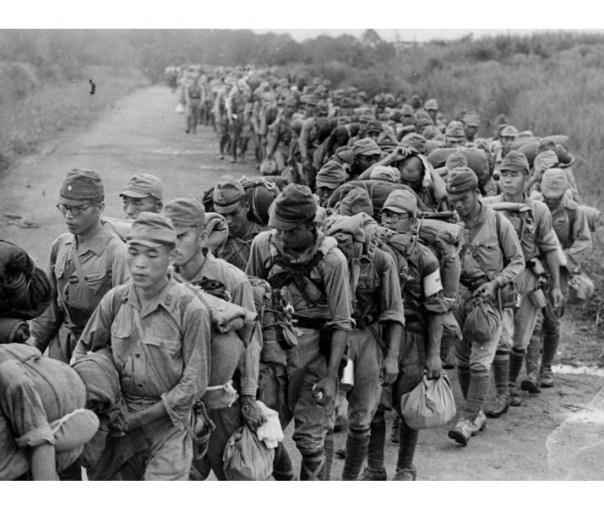
The approximately 1,000-3,000 Japanese soldiers who eventually joined the Indonesian side did not all make the same choice for the same reasons. Their motivations were as diverse as the individuals themselves — and understanding that diversity is essential to understanding what this chapter of history really means.
Shame of defeat — some could not face returning to Japan
Japan’s surrender was not merely a military defeat — it was a civilizational catastrophe for a culture in which military honor and national pride deeply intertwined. The shame of defeat, the fear of how they would be received at home, and in some cases the very real possibility of war crimes prosecution, made repatriation feel impossible.
Many also feared court-martial or being tried as a war criminal. For soldiers who had participated in the harsh occupation of Indonesia returning to face Allied tribunals or simply the judgment of their own society was a prospect they could not accept. Staying in Indonesia, joining a cause that seemed just, offered something that returning home did not: a chance to do something meaningful with what remained of their military lives.
The Case of Fujiyama Hideo — A Human Face on the Story
Among the most documented individual cases is Fujiyama Hideo, born in 1922 in Saga Prefecture. Fujiyama had fought for two years in Burma before being wounded in combat and transferred to Java, serving in the maintenance group of the 35th Training Squadron at the time Japan was defeated.
When Japan surrendered, Fujiyama made his choice without apparent hesitation. He later explained his reasoning in direct terms: “We are going to decolonize ourselves from the colonies, they said. We felt their enthusiasm. Why did we fight the war? The Japanese army said they would bring independence. So why not support that?”
Fujiyama’s statement captures something important about a subset of the Japanese soldiers who stayed — those who had genuinely believed in Japan’s wartime rhetoric about Asian liberation from Western colonialism. That rhetoric had always been partly cynical, a cover for Japanese imperial ambitions. But for some soldiers who had spent years in Indonesia watching Dutch colonialism’s absence, the Indonesian independence movement represented a chance to make the stated purpose of their war actual and real, even if the war itself had been lost.
Personal Bonds — Indonesian Wives, Families, and Friendships
For others, the decision was less ideological and more intensely personal. Japanese soldiers who had formed relationships with Indonesian women — married them, fathered children with them — faced a choice between abandoning their families and staying. Many stayed.
The human geography of these decisions was complicated. An Indonesian wife meant Indonesian in-laws, Indonesian neighbors, Indonesian communities who knew your face and your name. Going back to Japan meant abandoning all of it — and in many cases, condemning an Indonesian family to social stigma or economic hardship. Some soldiers simply could not do it.
The Case of Rahmat Shigeru Ono — The Soldier Who Stayed a Lifetime
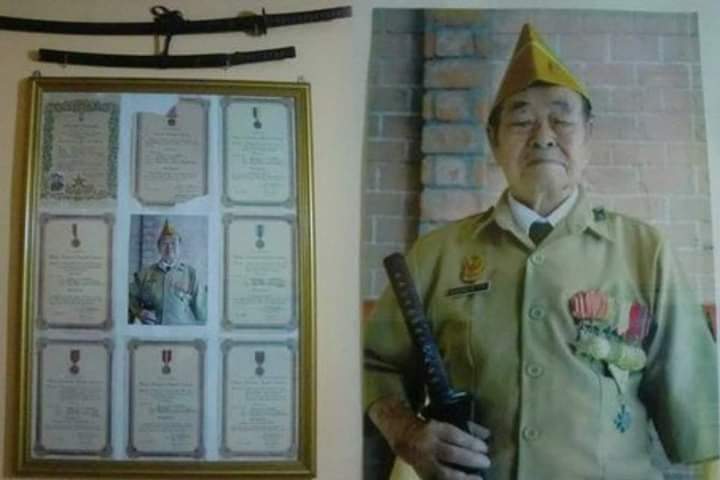
Rahmat Shigeru Ono was born Shigeru Ono on 26 September 1918 in Ōtomari, Karafuto — now Sakhalin, Russia. He served the Empire of Japan from 1939 to 1945, then switched his allegiance entirely, serving in the Indonesian Army as a Major from 1945 to 1949.
After Indonesian independence was secured, Ono did not return to Japan. He remained in Indonesia, converted to Islam, took the Indonesian name Rahmat, and built a life in East Java. He died on 25 August 2014 in Batu, East Java, at the age of 95 — having spent 69 years of his life as an Indonesian. His story is not the story of a man who stayed for the revolution and then went home. It is the story of a man who chose a country and never looked back.
The Case of Ichiki Tatsuo — The Journalist Who Became a Fighter
Ichiki Tatsuo was born in 1906 in Kumamoto Prefecture, Japan. He went to the Dutch East Indies at age 21 and worked in multiple jobs before becoming politically involved. After being unable to return to Indonesia, he became a propagandist during the Japanese invasion, showing clear sympathies for the independence movement. When the revolution came, Ichiki joined it — fighting not as a soldier primarily but as a propagandist and political supporter of the Republican cause. He died on 9 January 1949 in Malang Regency, still fighting for Indonesian independence, never having returned to the country of his birth.
What the Japanese Deserters Contributed to the Revolution
The Japanese deserters do not capture the actual contribution of the Japanese deserters to the Indonesian revolution. What they contributed was not so much as expertise, and expertise of a very specific and desperately needed kind.
Military Training — Teaching Guerrilla Tactics to Indonesian Fighters
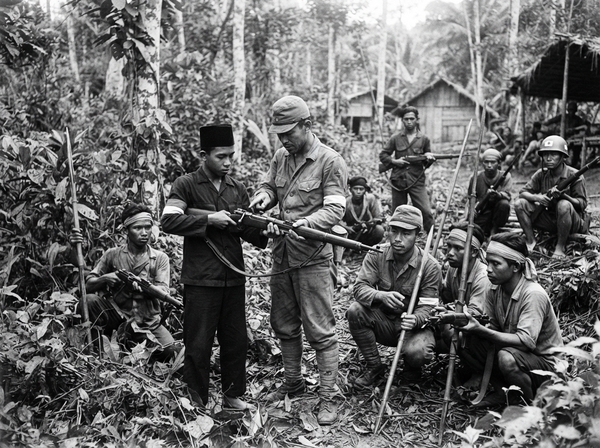
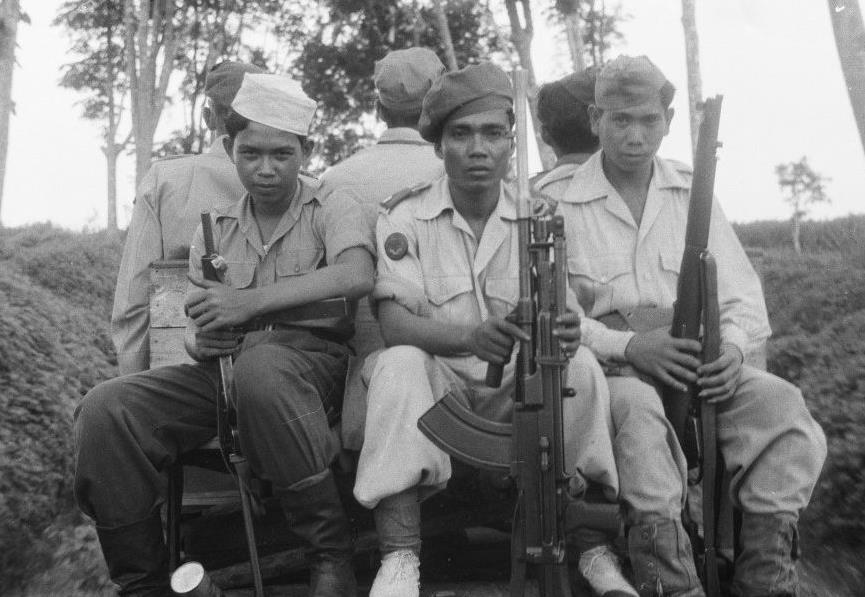
The Republican military in 1945 consist of trained men from PETA, but it had no experienced officers capable of organizing the troops. The lack of officers opened opportunity for the Japanese deserters in filling the gaps to organize the troops.
The Japanese forces who had fought in China, Burma, and other part of Southeast Asia brought experience and skills Indonesian fighter needed. They taught the new republican army with ambush tactics, defensive positioning, the use of artillery, and mortars. Most importantly, the Japanese also taught the Indonesian army the principal of coordinated guerilla warfare that would prove effective against the Dutch. The Japanese deserters provided tactical leadership, weapons and training to the ramshackle Indonesian forces.
Weapons and Ammunition — Japanese Stocks Transferred to Republican Forces
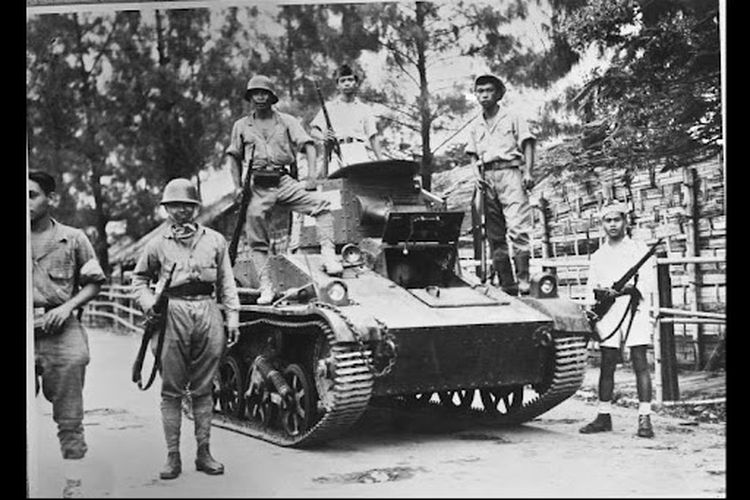
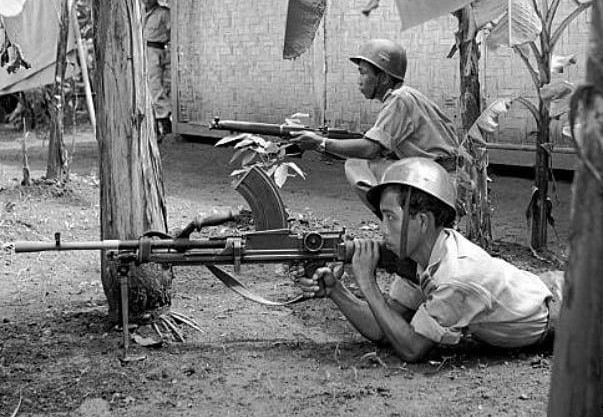
When Japan surrendered, its forces possessed enormous amount of military equipment in Indonesia. The allied directed all Japanese equipments to be surrendered intact to allied forces. In practice, significant quantities of Japanese military equipment found their way to the Republican hands.
Some Japanese soldiers, sympathetic to the Indonesian cause, provided arms and direct training to the Republican army. Their actions influenced the early stages of the national revolution. The weapons transfer was not organized or systematic – it happened through individual decisions , sometimes in coordination with Indonesian commanders and sometimes simply as personal acts of solidarity.
But its cumulative effect was significant. The Republican army that faced the Dutch in 1947 and 1948 was armed, in part, with Japanese weapons transferred by Japanese soldiers who had chosen Indonesia’s side.
Tactical Leadership — Japanese Officers Commanding Indonesian Units
According to the detailed figures, 903 Japanese volunteers fought alongside the Indonesian forces during the revolution, with 531 killed in action. It shows a casualty rate of nearly 60 percent that reflects both the intensity of the fighting and the frontline roles that Japanese fighters took on. They did not stay safely behind the lines. They fought, and they died, in numbers that are proportionally extraordinary.
Japanese officers who joined Indonesian units often took on command roles. They led the Indonesian fighters in operations, making tactical decisions in the field, and applying the professional military training that many Indonesian commanders simply did not yet have. Questions of authority, trust, and the memory of occupation created friction in some units. But in many cases the arrangement worked and Japanese tactical leadership contributed meaningfully to the Republican military’s ability to sustain guerrilla operations against Dutch forces through four years of intermittent war.
After Independence: What Happened to the Japanese Who Stayed?
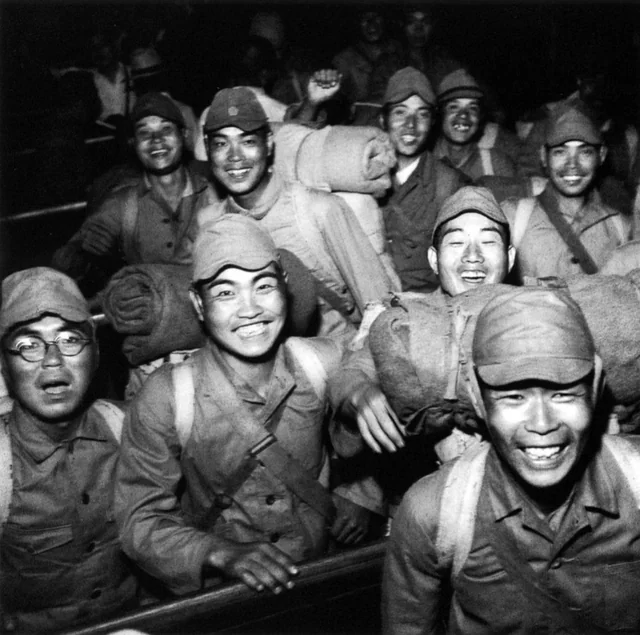
When Indonesian sovereignty was formally transferred on 27 December 1949, the approximately 470 Japanese deserters who had survived the revolution faced a new question — what came next?
Integration — Japanese who became Indonesian citizens
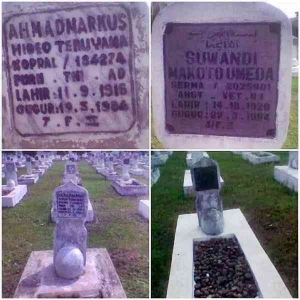
A significant number chose to remain in Indonesia permanently. They took Indonesian citizenship, converted to Islam in many cases, changed their names to Indonesian ones. They married Indonesian women, and built Indonesian lives. Based on interviews with Japanese soldiers in Indonesia, many had already married Indonesians and effectively become members of Indonesian communities. For these men, Indonesia was not a wartime posting from which they had simply failed to depart. It had become, genuinely and completely home.
Japanese men who had become Indonesian had to navigate the complex politics of a new nation that had complex feelings about Japan. Simultaneously grateful for Japan’s role in weakening Dutch colonial authority and deeply scarred by the brutality of the occupation. Being visibly Japanese in post-independence Indonesia required a particular kind of determination and a willingness to be judged by an individual record rather than a national one.
Recognition — Japanese Deserters Honored as Indonesian Heroes
Some of the Japanese deserters who fought for Indonesia eventually recognized by the Indonesian government. The recognition came slowly and incompletely, sincetheir contribution appears in almost no official Indonesian history. However, Indonesia acknowledged individuals like Rahmat Shigeru Ono as having chosen Indonesia’s side when it mattered.
At the Proclamation Museum in Central Jakarta, visitors can see a reference to the international dimension of the independence struggle. It includes the Japanese volunteers who fought for it. It is modest recognition for a contribution that deserves more.
Those Who Eventually Returned to Japan
Some others eventually went home after a few decades. They discovered the Japan they returned to was different from the one they had left in 1940s. Japan became an economic powerhouse and renounced militarism. The men who just returned became anomalies, soldiers from a war that Japan had lost, who had then fought in a war on the other side, for a cause that most Japanese people had never heard of.
Hayashi told Kyodo, the contribution of the Japanese soldiers doesn’t appear in either Japanese or Indonesian history textbooks. These men came home to a silence about their experiences and many considered this as an abandonment. First by Japan at the end of the war, and then by the history books that did not record their contribution and sacrifice.
Legacy: The Occupiers Who Became Liberators
What This Story Tells Us About the Indonesian Revolution
The story of Japanese deserters in Indonesia told something important about the Indonesian National Revolution. The revolution often narrated as a straightforward story on how Indonesian resist the Dutch colonialism. However, the real story shows that the Indonesian forces fighting the Dutch included 903 Japanese volunteers, 746 Indian army defectors, and fighters from across the archipelago united by a nationalist cause.
The men who had come to Indonesia as conquerors and stayed as comrades represent one of history’s more remarkable moral reversals. Soldiers who looked at the country they had occupied and decided that its independence was worth dying for, even after their own country had already lost. Their motivations were mixed, their histories complicated, and their contribution modest in military terms. But the fact that they made the choice at all says something profound about what the Indonesian independence movement represented — a cause compelling enough to inspire loyalty even in the soldiers of its former occupiers.
A Forgotten Chapter That Deserves to Be Remembered
Although there was a modest contribution to the ultimate victory over the Dutch in 1949, it illustrated the varied and complex part played by Japan in Indonesia’s attainment of independence and development as a nation. The Japanese deserters did not win Indonesian independence. The Indonesian people won Indonesian independence through four years of guerrilla warfare, diplomatic pressure, and the extraordinary determination of leaders like Sukarno, Hatta, and General Sudirman.
But the approximately 1,000 Japanese soldiers who stayed behind — who trained fighters, transferred weapons, led units in battle, and in 531 cases died fighting for a country that was not their own. They deserved a place in the story that history has long denied them.
One cultural artifact that attempted to tell this story is the 1996 Japanese film called Merdeka 17805. It’s a dramatization of the Japanese deserter’s experience during the National Revolution. The film follows Japanese soldiers who chose to stay behind after Japan’s surrender and join the Indonesian independence struggle against the Dutch. However, the Indonesian government banned the movie upon its release — a reflection of the politically sensitive nature of the subject and the complicated feelings that the Japanese occupation still evoked in Indonesian society. Despite its ban, the film remains one of the few visual records that brings the deserters’ story to life.
For the full story of the war they joined — and the Dutch military aggression they helped resist — read our article on Dutch Military Aggression in Indonesia. For the broader context of the Japanese occupation that shaped their decision, read our article on the Fall of Singapore and the Japanese campaign across Southeast Asia. And for the Yogyakarta Sultanate — whose Sultan played a crucial role in the independence struggle these men joined — read our article on the Yogyakarta Sultanate.
Resources
Alinea.id (n.d.) ‘Kisah heroik tentara Jepang yang membelot ke Republik’. Alinea.id. Available at: https://www.alinea.id/nasional/kisah-heroik-tentara-jepang-yang-membelot-ke-republik-b1ZRW9w1w.
Historia.id (2019) ‘7 Pejuang Asing dalam Perang Kemerdekaan di Indonesia’. Historia.id, 9 August. Available at: https://www.historia.id/article/7-pejuang-asing-dalam-perang-kemerdekaan-di-indonesia.
Japanese Station (2014) ‘“Samurai Jepang” Shigeru Ono bangga berjuang demi kemerdekaan RI’. Japanese Station, 5 September. Available at: https://japanesestation.com/culture/history/samurai-jepang-shigeru-ono-bangga-berjuang-demi-kemerdekaan-ri.
War Wings Daily (2024) ‘The Indonesian National Revolution (1945–1949)’. War Wings Daily, 22 November. Available at: https://warwingsdaily.com/wars/the-indonesian-national-revolution-1945-1949/.
Simpson, P. (n.d.) ‘平良定三、インドネシア名・ニヨマン ブレレンのインドネシア・バリ島における反植民地主義抵抗運動の指導者の一人’ [‘Taira Teizo, also known as I Nyoman Buleleng: One of the leaders of the anti-colonial resistance movement in Bali, Indonesia’]. Journal of Foreign Languages, Okinawa International University. Available at: https://cir.nii.ac.jp/crid/1050566774788024576.