
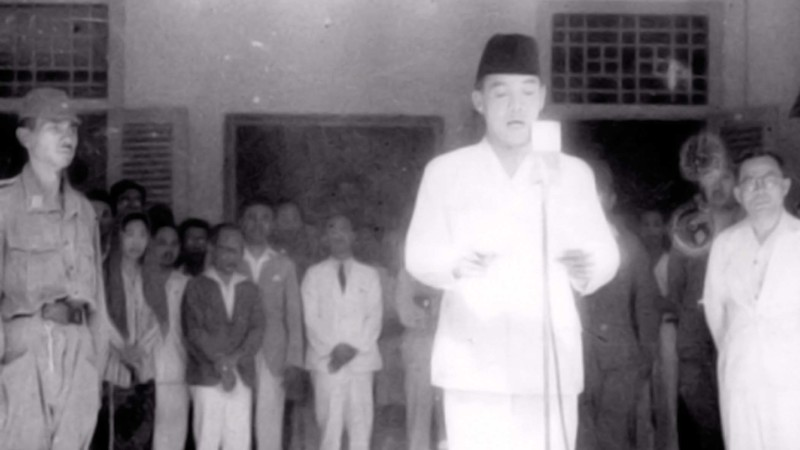
On the morning of 17 August 1945, a man stood before a microphone in a modest house in Jakarta and changed the course of Southeast Asian history. President Sukarno, Indonesia’s most prominent nationalist leader, read out Indonesia’s declaration of independence. However, the Dutch did not consider this as an official declaration.
What followed was a four-year conflict that cost hundreds of thousands of lives. It involved two major military offensives, drew condemnation from the United Nations, and ultimately ended in humiliating Dutch withdrawal. In the Netherlands, official history called it a politionele actie or a police action. In Indonesia, they called it what it was: agresi militer Belanda or Dutch military aggression. The gap between those two terms tells you almost everything you need to know about this war.
Indonesia’s proclamation and the post-war power vacuum (1945)
Japanese occupation 1942–1945 — how it hollowed out Dutch authority
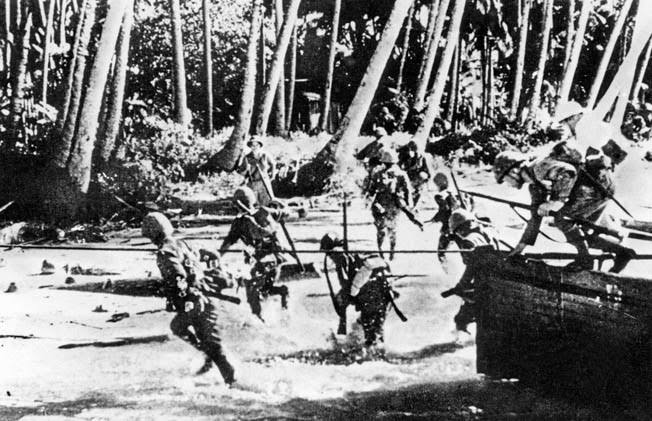
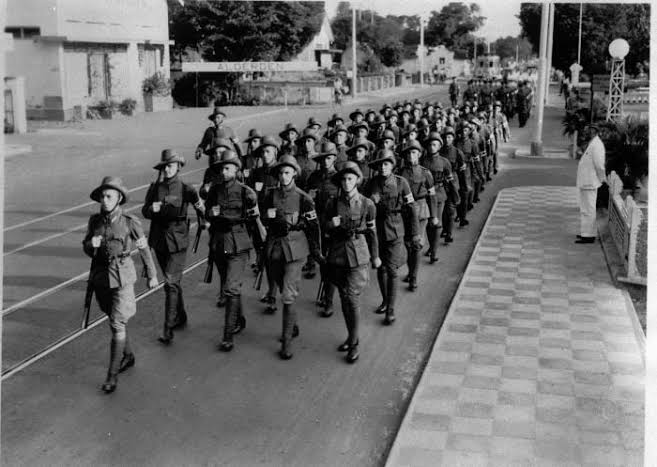
When Japanese forces swept through the Dutch East Indies in early 1942, they successfully dismantled Dutch colonial authority almost overnight. The Dutch military surrendered in March 1942 after barely three months of fighting. Similar to the Fall of Singapore, the defeat of the Dutch shattered the myth of European invincibility that had underpinned colonial rule across Asia. The Japanese interned many Dutch colonial officials, soldiers, and civilians in prisoner camps. The infrastructure of Dutch colonial power — its civil service, its police force, its military presence simply ceased to exist.
Japan replaced the Dutch colonialism with Japanese imperialism. But the three and a half years of Japanese occupation had profound consequences for the independence movement. Japanese authorities, seeking local cooperation, promoted Indonesian nationalist figures to administrative positions that Dutch colonial rule had always denied them. They trained Indonesian youth in military skills through organizations like PETA (Defenders of the Fatherland), creating a generation of young Indonesians with both military training and revolutionary ambition. And by the time Japan surrendered in August 1945, the Dutch colonial system had been absent from Indonesian life for three and a half years. The idea that it could simply return was, for most Indonesians, unthinkable.
The pemuda (youth) movement and the urgency behind the proclamation
The most immediate pressure on president Sukarno and vice-president Hatta came from the Pemuda. Pemuda known as a revolutionary movement that had grown up during the time of Japanese occupation. Many considered this movement as radical, impatient, and deeply suspicious of any compromise that might delay Indonesia’s independece. When Japan surrendered on 15 August 1945, the pemuda saw a narrow window — a power vacuum between Japanese collapse and Allied arrival.
On the night of 15 August, a group of pemuda effectively kidnapped Sukarno and Hatta, taking them to Rengasdengklok, a location outside Jakarta and demanding they proclaim independence immediately. Without waiting for Japanese permission or Allied recognition, on 17 August 1945, Sukarno read the independence declaration in the modest courtyard. The Republic of Indonesia was born.
British troops arrive first — awkward Allied middle position
The first Allied forces to arrive in the Indies were the British, a consequence of the wartime command structure that had placed the region under Lord Mountbatten’s South East Asia Command. British and Indian troops began arriving in September 1945 tasked with accepting the Japanese surrender, maintaining order, and releasing Allied prisoners of war.
The British faced a deeply uncomfortable and awkward position. Based on the initial allied agreements, the British obliged to facilitate the return of the archipelago to the Dutch authority. However, they found themselves in a country where a functioning republican government already existed, where the population overwhelmingly hostile to Dutch return. Additionally, the Pemuda have armed themselves and ready to fight the Dutch. British commanders repeatedly urged the Dutch to negotiate seriously with the republican leadership, recognizing that military reconquest would be costly and ultimately futile. The Dutch, convinced that their colonial position could be restored largely ignored the advice.
Dutch economic stakes in the Indies (oil, rubber, sugar)
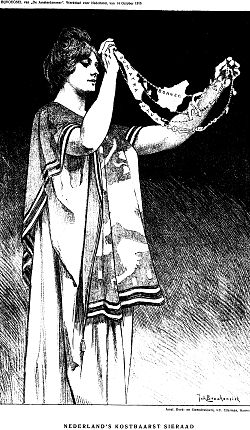
Economic reason became the main reason that fuel the determination of the Netherlands to regain control of Indonesia. The Dutch East Indies has became the financial foundation of the Dutch economy. What the Dutch wanted back was not just the territory, it was the oil fields of Sumatra and Borneo, among the most productive in Asia; the rubber plantations that supplied European industry; the sugar estates of Java; the tin mines, the coffee, the tea. The Indies generated wealth that dwarfed anything the Netherlands could produce domestically.
Netherlands emerging from the devastation of Nazi occupation with its economy shattered, infrastructure destroyed, and its population exhausted. They desperately needed the income that the Indies represented. The economic calculation was simple and brutal: without Indonesia, Dutch post-war recovery would be immeasurably slower and more painful. This economic desperation helps explain why Dutch governments pursued military solutions even as the diplomatic and military costs mounted beyond what the country could reasonably afford.
Failed diplomacy: the Linggadjati Agreement and broken promises (1946–1947)
Linggadjati Agreement — what was agreed, what was ambiguous
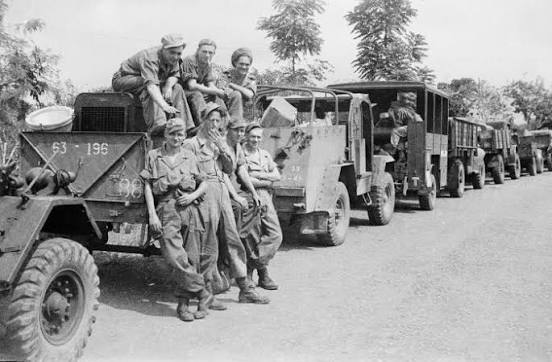
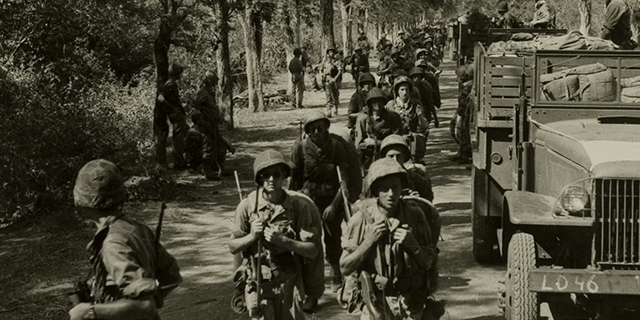
The first major attempt at a negotiated settlement between the Netherlands and the new republic produced the Linggadjati agreement in November 1946. On paper, the agreement represented significant Dutch concessions, where the Netherlands recognized the Republic of Indonesia as de facto authority over Java, Madura, and Sumatra, and both parties agreed to work toward the creation of a United States of Indonesia as a sovereign state within a Dutch-Indonesian Union.
In practice, the agreement was riddled with deliberate ambiguity that each side interpreted differently. The Dutch saw the United States of Indonesia as a structure that would preserve meaningful Dutch influence through the Union framework, essentially a continued Dutch role in Indonesian affairs under a new label. The Republic saw it as a pathway to full sovereignty. These incompatible interpretations made the agreement’s failure almost inevitable from the moment it was signed.
Dutch federalist strategy — creating puppet states to dilute the Republic
While nominally committed to the Linggadjati process, the Dutch were simultaneously pursuing a strategy designed to undermine the Republic from within. In territories under their control, the Dutch authorities actively promoted the creation of new autonomous states that would form the constituent parts of the United States of Indonesia alongside the Republic.
The Dutch had a clear strategy here. They wanted Indonesia to become a federal country where the Republic was just one state among many. The other states created by the Dutch would continue to support the Dutch government and their influence. This would weaken the Republic and prevent Sukarno and Hatta from building the strong, united, and independent Indonesia. In conclusion, the Dutch promoted federalism as a tool to divide the country once again and to reduce the Republic’s power.
Breakdown of talks and Dutch decision to use military force
By mid-1947, Dutch patience with diplomacy had run out where the Dutch military decided to conduct a swift military operation. Economic factor became the main cause for the Dutch to send their armies back. the new Republic controlled the agricultural and resources of Java and Sumatra, which cost the Dutch massive revenue that they could not afford. Finally on 15 July 1947, the Dutch government delivered an ultimatum to the Republic. When the Republic’s response deemed inadequate, Dutch forces launched their offensive 2 days later.
Operation Product: the first “police action” (July–August 1947)
Military objectives — economic assets, not just political control
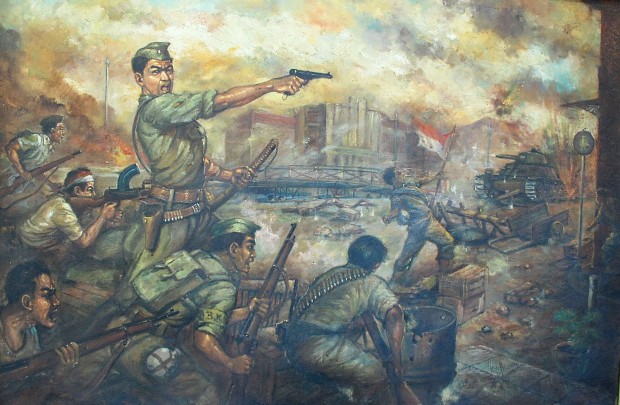
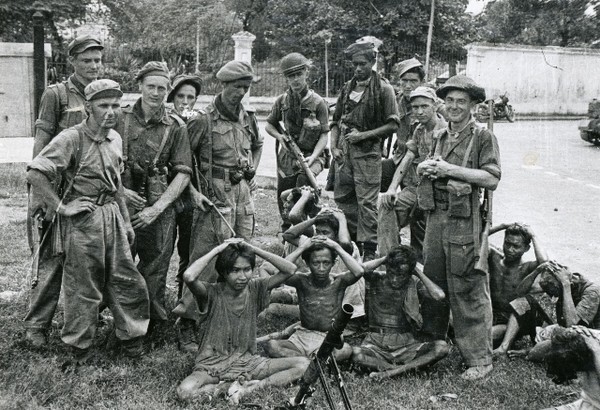
The Dutch named their military offensive as “Operation Product“, a name that revealed its true purpose. The primary military objectives were not the republican capital but the economic assets that the Dutch needed to restart their colonial revenue stream. The oil fields of Sumatra, the plantation districts of Java, and major ports became the main target.
Dutch forces took Sumatra’s plantations and Java’s ports with considerable military efficiency. Within weeks, they had seized control of most of the productive economic infrastructure of Java and Sumatra, surrounding but not capturing the republican heartland. From military standpoint, the operation considered to be largely successful, but not for diplomatic standpoint.
UN Security Council intervention — ceasefire pressure
The United Nations shows a swift and hostile response toward the Netherlands. Operating in the new post-war order, colonialism became increasingly infamous. The United Nations tried to intervene and calling for a ceasefire. The United States and Australia became more vocal in pressuring the Netherlands to stop their offensive.
The Dutch miscalculated the international environment. The world in 1947 has changed massively under the United Nations and American power. The United States had little interest in expending its diplomatic capital in defending the Dutch Colonial reconquest when it simultaneously trying to present itself as the champion of freedom against Soviet communism.
The Renville Agreement — another failed peace attempt
Under American mediation aboard the USS Renville, both parties of Indonesia and the Netherlands reached a new agreement in 1948. The Renville agreement confirmed a ceasefire along the Van Mook Line and established framework for future negotiations.
Like Linggadjati Agreement, Renville satisfied neither side and interpreted by both parties in ambiguous ways. The Republic had been forced to accept a ceasefire that left the Dutch in control of most of Indonesia’s economic heartland. The Dutch accepted a ceasefire that left the Republic intact when they had hoped to eliminate it. The diplomatic failure prevent the blood shed. However, both sides knew that the military conflict was not finished.
Operation Kraai: the second aggression and the fall of Yogyakarta (December 1948)
Dutch goal — dissolve the Republic, install a compliant federation
By December 1948, the Dutch decided that half-measures were not working. The Dutch opted to launch operation Kraai or known as operation Crow to reestablish further control in the archipelago. Their goal shifted not merely to seize the economic assets, but also to destroy the Republic of Indonesia as a functioning political entity.
Dutch planners believed that if they could capture the republican leadership and occupy the republican capital at Yogyakarta, Indonesian independence could extinguished permanently. On 19 December 1948, Dutch paratroopers dropped on Yogyakarta while ground forces advanced simultaneously. The republican capital fell within hours.
Sukarno captured — a propaganda disaster for the Netherlands
The Dutch achieved their military objectives with startling speed. The Dutch captured Sukarno, Hatta, and most of the republican cabinets and sent them to exile on the island of Bangka. For a moment, it appeared that Operation Kraai had succeeded. The republican government sent to exile, its capital occupied, and military forces scattered.
However, the capture of Sukarno became a propaganda disaster for the Netherlands. Internationally, the image of Dutch forces capturing the democratically recognized president of a country that had peacefully proclaimed its independence was devastating. The United Nations Security Council issued emergency demands for the release of republican leaders and Dutch withdrawal. The Dutch had handed their opponents the most powerful possible argument against their position.
General Sudirman’s guerrilla war — the Republic fights on without its capital
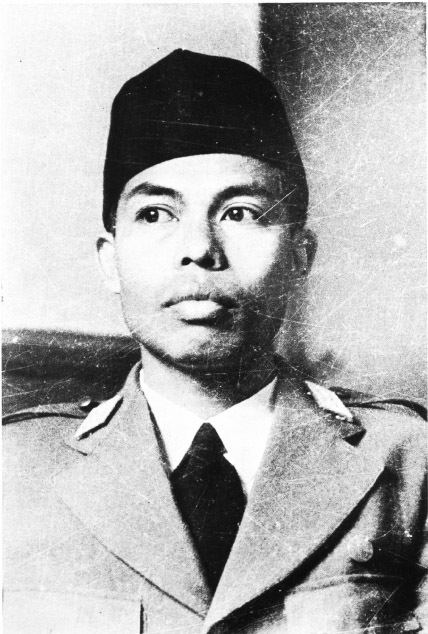
The Indonesian military known as Tentara Nasional Indonesia (TNI) under General Sudirman continued their resistance from the countryside.Sudirman, himself gravely ill with tuberculosis, directed guerrilla operations from a stretcher carried through the jungles of Java, refusing to surrender or submit even as Dutch forces controlled every major city on the island.
The guerrilla war that followed Operation Kraai demonstrated the fundamental weakness of the Dutch strategic position. They could occupy cities and roads, but they could not control the villages, the jungle, and the countryside where the Republican military operated. The countryside was enemy territory, and the Dutch lacked both the manpower and the local legitimacy to fully pacify and control it.
The March 1949 general attack on Yogyakarta — proof the Republic survived
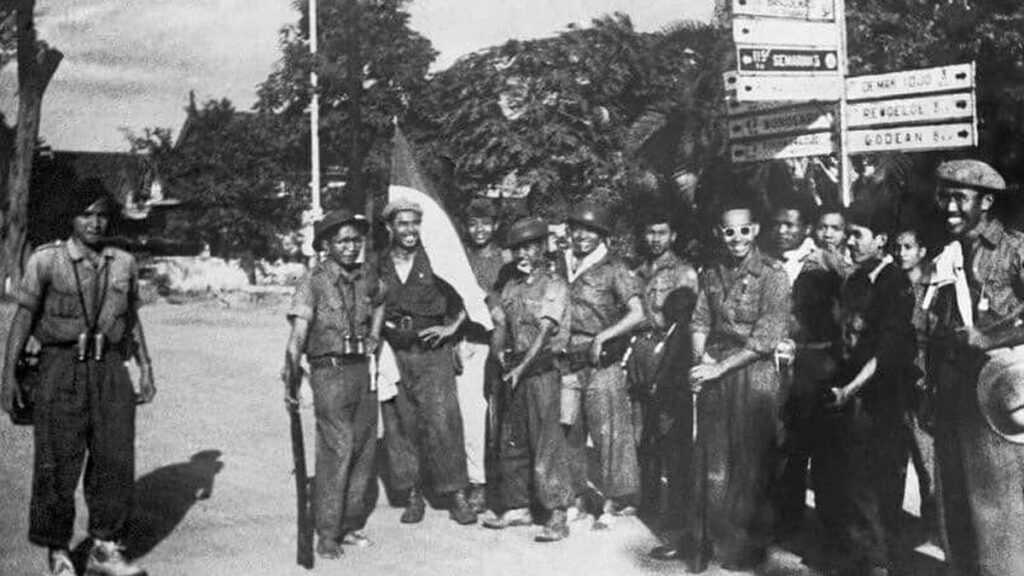
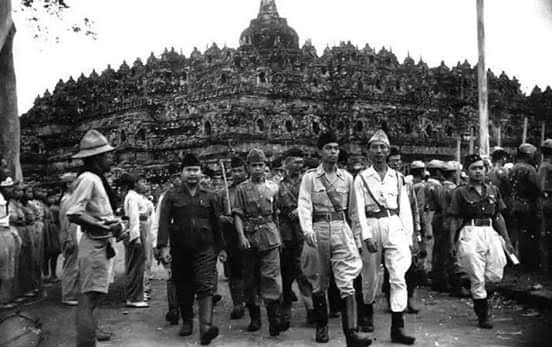
On 1 March 1949, Republican forces under Lieutenant Colonel Suharto (later become Indonesia’s second president) launched a coordinated general attack on Yogyakarta. The sudden attack briefly recapturing the city and holding it for six hours before the Dutch reinforcement drove them out. The military significance of the attack was limited, however it produced enormous political effect on Indonesia’s struggle to independence.
The general attack demonstrated to the world that the Republic of Indonesia was not defeated. It shows that the military still functioned, still commanded popular support, and still controlled enough territory to mount coordinated counter-offensive. The Republic had survived Operation Kraai. And if it had survived Operation Kraai, it would survive anything short of a total war that the Netherlands could not afford, would not be permitted to fight, and had already lost the political will to pursue.
International pressure and the Dutch retreat (1949)
US threatens to cut Marshall Plan aid — the decisive pressure point
The factor that ultimately forced the Netherlands to accept Indonesian independence was not military defeat, but American economic power. After the Second World War, The United States funded Dutch post-war reconstruction through the Marshall Plan, and American patience with Dutch colonial aggression had reached its limit after Operation Kraai.
The Truman administration made the ultimatum explicit: if the Netherlands did not immediately release the republican leaders, withdraw its forces, and enter genuine negotiations on Indonesian sovereignty, Marshall Plan aid would be cut. For a Netherlands whose economy was still recovering from Nazi occupation and whose colonial adventure had already consumed resources it could not afford, the loss of American aid would have been catastrophic. The Dutch government had no real choice.
The Hague Round Table Conference — sovereignty terms
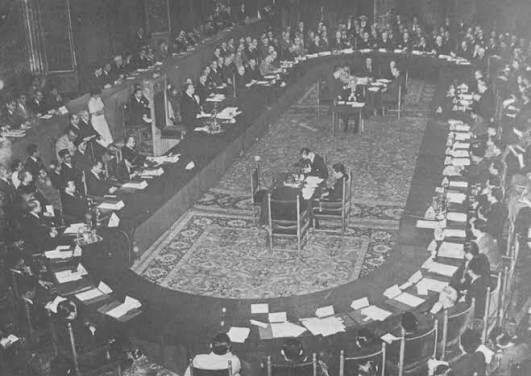
The UN security council passed resolutions demanding the release of the republican leaders and the restoration of the republican government. Between August 1945 and 1949, an estimated 100,000 Indonesian were killed with 5,300 Dutch killed during the 4 years combat.
The combination of economic and political pressure made the Dutch to rethink their decision. Finally in May 1949, the Dutch forces withdrew from Yogyakarta and restored the republican government. In addition, the Dutch released Sukarno and Hatta from exile, with negotiation for final sovereignty began between the two parties.
The negotiation known as the Round Table Conference at The Hague, held from August 1949 to November 1949. The agreements did not entirely favorable to Indonesia, since it required Indonesia to assume debts of the colonial government. At midnight on 27 December 1949, the Netherlands formally transferred sovereignty over Indonesia to the Republic of the United States of Indonesia.
The ceremony took place simultaneously in Amsterdam and Jakarta. In Amsterdam, Queen Juliana signed the document of transfer. In Jakarta, the Dutch flag was lowered and the Indonesian red-and-white raised in its place. Four years, four months, and ten days after Sukarno had read his 67-word proclamation in a courtyard in Jakarta. The international world finally recognized the new state of Indonesia. After
Atrocities, memory, and Dutch reckoning
Scale of violence — 100,000–250,000 estimated Indonesian deaths
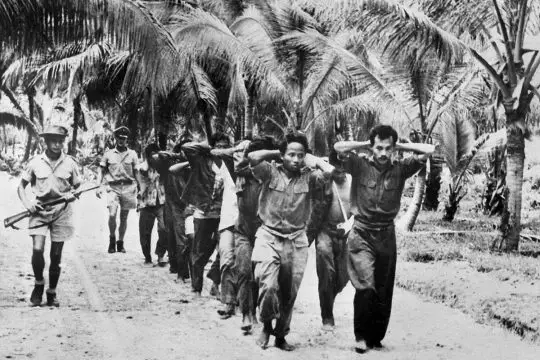
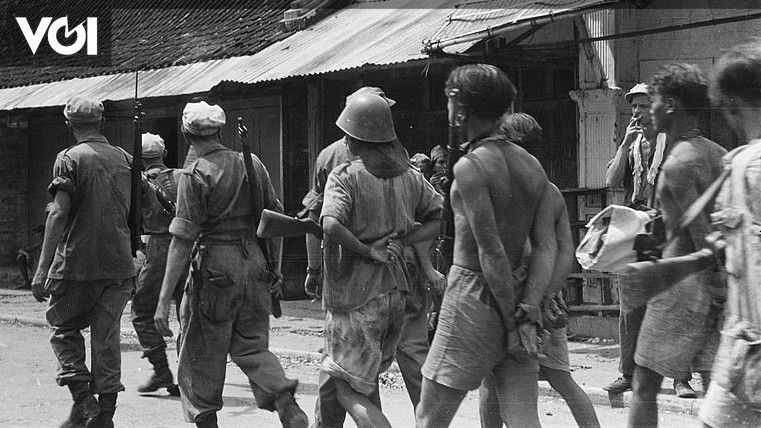
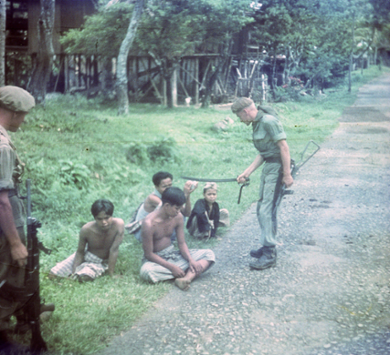
Around 100,000 Indonesians died as a direct result of the war, with the Dutch deaths numbered approximately 5,300. This ratio reflects both the asymmetry of the conflict and the nature of Dutch military operations, which frequently targeted civilian populations suspected of supporting the Republic.
The violence took multiple forms – summary executions of prisoners and civilians, village burning, torture during interrogation. In addition, the Dutch conducted “scorched earth” tactics designed to deny the Republican forces the food, shelter, and popular support they needed to operate.
The Dutch euphemism problem — “police action” vs “agresi militer”
For decades after 1949, the Dutch government and much of Dutch society maintained that the military operations in Indonesia had been “police actions”. They believed that their action considered as a limited law enforcement operations against bandits and extremists, not a colonial war of reconquest. After 1949, governments framed the conflict as a minor “police action” with some “excesses,” kept many files obscure, and treated the war as a closed historical chapter, which delayed public reckoning and legal accountability.
In Indonesian historical memory, the same events are called agresi militer or military aggression. This historical chapter was taught as a foundational chapter of national independence struggle in schools across Indonesia. The gap between these two framings reflects fundamentally incompatible understandings of whether Indonesian independence was legitimate, whether Dutch military force was justified.
Court cases and compensation — 20,000 euros to widows of victims
The legal reckoning began in the 21st century. Dutch courts held the state liable for specific atrocities most notably the Rawagede massacre of 1947. In which Dutch troops killed over 400 unarmed men in a West Java village in a single morning. Starting in the 2010s, Dutch courts held the state liable for specific massacres like Rawagede and South Sulawesi, leading to apologies and compensation to survivors’ families. Widows of massacre victims received compensation of 20,000 euros each — an acknowledgment of legal liability that was also, inevitably, an acknowledgment of the facts that the Dutch government had spent decades denying.
Dutch Prime Minister Mark Rutte also acknowledged that the Netherlands had used systematic extreme violence and that earlier governments had long failed to fully face this history. Rutte’s statement — “I make a deep apology to the people of Indonesia today for the systematic and widespread extreme violence by the Dutch side in those years and the consistent looking away by previous cabinets” — was the most complete official acknowledgment the Netherlands had ever made of what happened in Indonesia between 1945 and 1949.
Legacy: what the Dutch aggression set in motion
KNIL soldiers — loyal to a Netherlands that no longer needed them
Among the most tragic consequences of Indonesian independence were the thousands of KNIL soldiers or members of the Royal Netherlands East Indies Army . Many of them Ambonese Christians from the eastern islands of Indonesia. These men and their families found themselves in an impossible position when Indonesia gained independence: too loyal to the Netherlands to serve in the new Indonesian army, yet citizens of a new state that viewed them with suspicion.
Many KNIL soldiers and their families moved to the Netherlands — a country most of them had never visited, whose language they often did not speak fluently. The Ambonese community in the Netherlands today numbering in the tens of thousands. It became a direct human legacy of the Dutch decision to recruit colonial soldiers for a colonial war that ended in colonial defeat.
The Republic of South Maluku (RMS) — a dream born from the chaos
On 25 April 1950, Ambonese leaders proclaimed the Republic of South Maluku or Republik Maluku Selatan. They rejected the idea of incorporation into the Republic of Indonesia and seeking independence as a Christian-majority nation in Molucca islands. The Indonesian military successfully suppressed the RMS within months. However, its proclamation reflected the genuine fears of Ambonese communities who had cast their lot with the Dutch and now faced an uncertain future in an Indonesia.
The RMS dream lived on in the Netherlands, where Ambonese exiles kept it alive for decades — and occasionally with violent consequences, most notably the 1975 train hijacking in the Netherlands carried out by young South Moluccan activists. It was a legacy of colonial violence rippling forward into the heart of Europe. For the full story of this diaspora and its fascinating legacy, read our article on the Dutch Colonization of Indonesia.
Blueprint of global Decolonization across the globe
The Indonesian independence struggle and particularly the role of international pressure, became a template that other colonial independence movements studied carefully. The lesson was clear: military resistance alone might not be enough, but military resistance combined with international legitimacy, UN recognition, and pressure on the colonial power’s great-power patrons could succeed even against a militarily superior opponent.
From Algeria to Kenya, from Vietnam to Angola, the leaders of anti-colonial movements watched Indonesia and took notes. The combination of armed resistance and diplomatic pressure — the strategy that Sukarno, Hatta, Sudirman, and the Republican government had pursued through four years of Dutch military aggression, became the standard model for the decolonization movements that would reshape the world over the following two decades.
The Dutch called it a police action. Indonesia called it military aggression. History calls it as the last, futile attempt of a European colonial power to hold onto an empire that a determined, legitimate, internationally recognized independence movement had already won. The red-and-white flag that Sukarno raised in his courtyard on 17 August 1945 flew over a sovereign nation on 27 December 1949. It has never come down.
For more on the broader context of Dutch colonial rule in Indonesia and its lasting impact on the region, read our articles on the Yogyakarta Sultanate whose role in the independence struggle was central. Also, the Aceh War which foreshadowed the determination that Indonesian resistance would show again in 1945–1949.
References
Ahsan, I.A. (2017) ‘How the Dutch Responded to Indonesia’s 1945 Proclamation’, Tirto, 17 August. Reproduced on Historibersama. Available at: https://historibersama.com/how-the-dutch-responded-to-indonesias-1945-proclamation-tirto/
Alfari, S. (2026) ‘Perlawanan Indonesia terhadap Belanda sampai awal abad 20: Sejarah kelas 11’, Ruangguru, 23 July. Available at: https://www.ruangguru.com/blog/strategi-perlawanan-bangsa-indonesia-terhadap-penjajahan-belanda
Bonasir, R. (2022) ‘Penelitian sejarah aksi militer Belanda di Indonesia era Revolusi 1945–1950: Istilah “bersiap” yang sensitif dan ketakutan akan kejahatan perang’, BBC News Indonesia, 17 February. Available at: https://www.bbc.com/indonesia/dunia-60274538
Detik.com (2023) ‘Serangan Umum 1 Maret 1949: Perjuangan Indonesia melawan Belanda’, DetikSumut, 28 February. Available at: https://www.detik.com/sumut/berita/d-6591249/serangan-umum-1-maret-1949-perjuangan-indonesia-melawan-belanda
Sandra (2025) ‘Agresi Militer Belanda I: Upaya menguasai kembali Indonesia’, INCA, 17 March. Available at: https://inca.ac.id/agresi-militer-belanda-i/
van Dijk, B. (2022) ‘Aggression, war crimes, and the Indonesian Revolution’, Verfassungsblog, 25 January. Available at: https://verfassungsblog.de/aggression-war-crimes-and-the-indonesian-revolution/
Poeze, H., Schulte Nordholt, H. and Marini, G. (2024) Merdeka: The struggle for Indonesian independence and the Republic’s precarious rise, 1945–1950. Amsterdam: Amsterdam University Press
McMillan, R. (2005) The British occupation of Indonesia, 1945–1946: Britain, the Netherlands and the Indonesian Revolution. London: Routledge.